
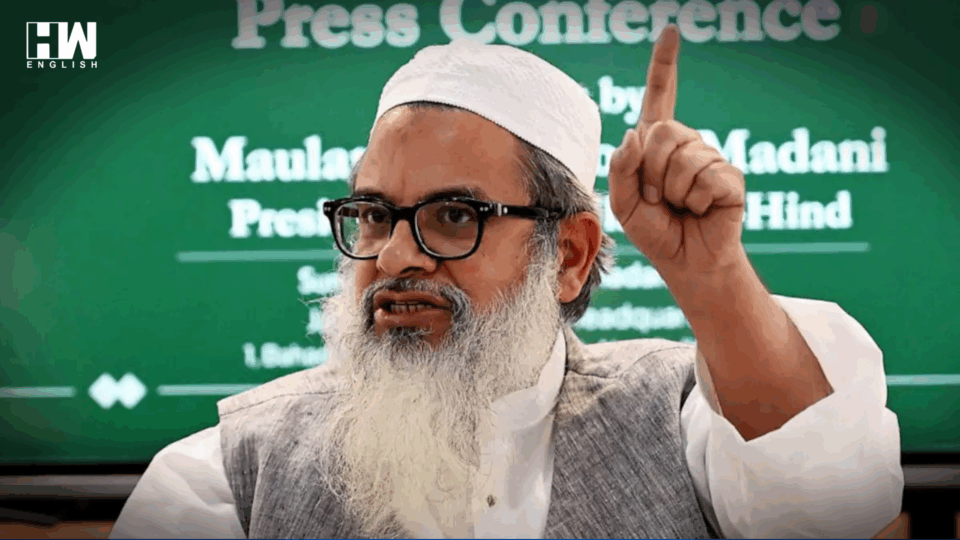
Jamiat Ulema-e-Hind President Mahmood Madani has sparked a controversy after he said that “if there is oppression, there will be jihad.” He accused the judiciary and the government of undermining minority rights.
Mamdani objected to the way jihad is portrayed in public. He criticised the media and government for distorting the “holy” concept. He also said that usage of terms like “love jihad,” “spit jihad,” and “land jihad” are misrepresented from their true meaning.
Madani alleged that recent court verdicts, like those on the Babri Masjid and triple talaq, suggest that the country’s judiciary was functioning “under government pressure.” He further went on to claim that “many such decisions” have emerged in recent years which “openly violated the rights of minorities.”
Madani, while talking about the judiciary, said that the “Supreme Court is entitled to be called ‘Supreme’ only as long as the Constitution is protected” and if this does not happen, then it “does not deserve to be called supreme.”
Madani commented on the public sentiments regarding Muslims of India. He said that 10% are supportive, 30% are against them, while 60% remain silent. He has urged Muslims to engage with this silent 60% majority by explaining their issues. He also warned that if this 60% turned against Muslims, then there would be a “big anger in the country.”
Soon after this remark of his, there was a sharp political reaction from the BJP who accused him of inciting Muslims.
BJP MLA Rameshwar Sharma said that “new Jinnahs are emerging in India who are trying to provoke the country’s Muslims.” He also demanded that the Supreme Court should take suo motu cognisance of Madani’s comment.
As an independent media platform, we do not take advertisements from governments and corporate houses. It is you, our readers, who have supported us on our journey to do honest and unbiased journalism. Please contribute, so that we can continue to do the same in future.
