
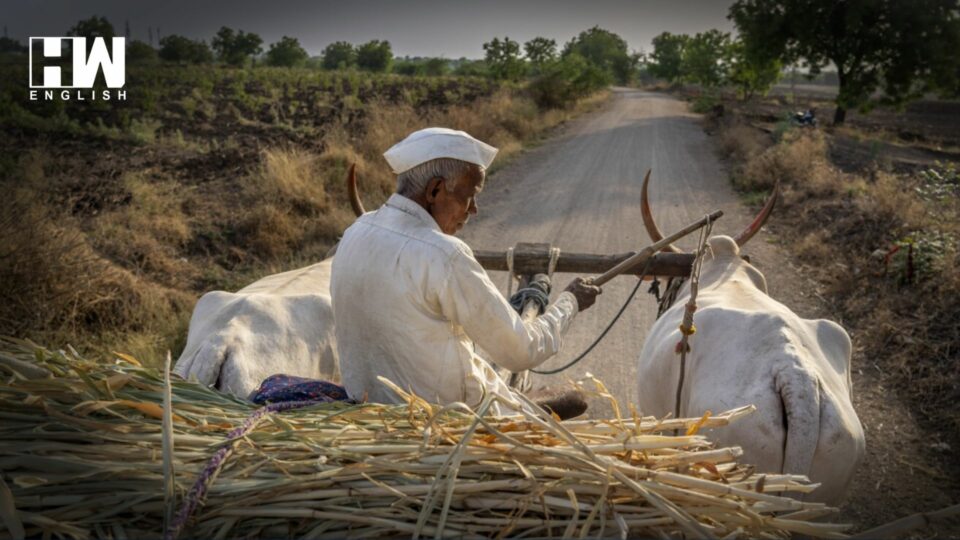
It is time we stop looking at farmers as beneficiaries of charity and start seeing them as entrepreneurs who feed the nation. The farmer is not asking for pity, only for fairness and opportunity
According to NCRB report, 10,786 farmers in India ended their lives in 2023. Of these, nearly 38% percent were from Maharashtra followed by Karnataka with 22.5%. Behind these numbers are families, fields, and futures that collapsed under the weight of debt, loss, and despair.
In Marathwada alone, 1088 farmers died by suicide last year. In just the first three months of this year, Maharashtra recorded 767 farmer suicides. That means every few hours, a farmer somewhere in the state gave up hope. These are not just statistics; they are the stories of lives that fed us all.
Farming anywhere in the world comes with uncertainty. Floods, droughts, and pest attacks can destroy crops and income. Yet India stands apart for the sheer number of farmer suicides, especially in Maharashtra. The real question we must ask is, what are we not doing right?
One of the biggest mistakes has been in how we view agriculture. Farming is a business, not social service. Because we treat it as a service we talk of welfare, subsidies and relief packages instead of profit, investment, technology, and modernization.
The result is that while India’s cities have moved fifty years ahead, much of rural India remains stuck in the past, both in lifestyle and opportunity. We have failed to give farmers dignity, growth, and fair income.
Agriculture should not be judged on yearly income like other industries. A farmer may earn well one year, lose everything for the next two, and recover only in the fourth or fifth. If we plan with a five year horizon and help farmers earn enough in a good harvest to survive lean years, we can bring down suicides. It will not make their lives easy overnight, but it will bring stability and hope.
Farmers also need alternate income streams to cushion against loss. Programs like MNREGA, rural infrastructure work that hires local labour, and small village based industries can give families additional earnings. When the land fails them, something else must hold them up.
Another area of urgent reform is the way farmers sell their produce. Middlemen often double as moneylenders, trapping farmers in cycles of debt. If farmers can sell directly to consumers or retailers with government support for storage and distribution, they will earn more and depend less on exploitative networks.
Most of all, we need to treat the Agriculture Ministry with the same seriousness as Defence, Finance, or Home. Food security is national security. Our agriculture department should be led by trained experts, not generalists. India should consider creating an Indian Agriculture Service, on the lines of the Indian Administrative or Foreign Services, to ensure policy is guided by those who understand the soil, the climate, and the economics of farming.
It is time we stop looking at farmers as beneficiaries of charity and start seeing them as entrepreneurs who feed the nation. The farmer is not asking for pity, only for fairness and opportunity. There is nothing more important for a country than food, and nothing more urgent than saving the hands that grow it.
Sujit Nair is Managing Editor, HW News.
Dear Readers,
As an independent media platform, we do not take advertisements from governments and corporate houses. It is you, our readers, who have supported us on our journey to do honest and unbiased journalism. Please contribute, so that we can continue to do the same in future.
As an independent media platform, we do not take advertisements from governments and corporate houses. It is you, our readers, who have supported us on our journey to do honest and unbiased journalism. Please contribute, so that we can continue to do the same in future.
