
India must exercise caution in its engagement with the Taliban – a prudence that neither the United States nor Pakistan maintained, and one that ultimately cost them dearly
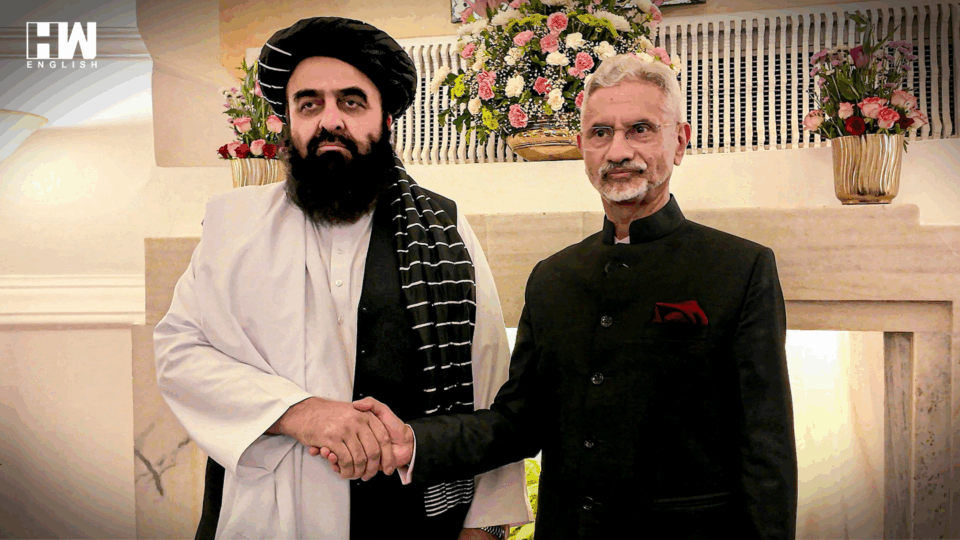
The recent diplomatic visit by Taliban ruled-Afghanistan’s Foreign Minister, Amir Khan Muttaqi, was closely observed by people in India and around the world. The visit gained significance when Pakistan launched a missile strike in Kabul while Muttaqi was still in India. Pakistan later faced a severe pushback from its eastern neighbour along the Durand Line in the aftermath of the strikes.
Opinion leaders in Pakistan attributed this pushback to the growing ties between India and the Taliban. Muttaqi, later in his visit to India, received a rousing reception by the Taliban’s ideological parent institution, the Deoband mosque in Uttar Pradesh. This visit can be observed as a diplomatic and cultural connection of the Taliban-administered Afghanistan with India.
The heated skirmish between Pakistan and Afghanistan, which claimed several lives on both sides while Muttaqi was still in India, effectively ended the strategic depth and influence that Pakistan had enjoyed in Afghanistan for years. Pakistani ministers, in their speeches in the National Assembly, have been expressing growing hostility toward Afghanistan. India now appears to pursue the strategic influence that Pakistan once held – and which the United States held before Pakistan – in Afghanistan.
But the question arises: is it wise for India to occupy that position of strategic influence in Afghanistan? Should India nurture an extremist organization that is administering a country? And will that same organization eventually turn against India?
We can analyse the experiences of the two nations that previously nurtured the Taliban — the United States of America and Pakistan and how their relationship ended with the Afghan militant group.
Let’s begin with the 1st patron of Taliban: The United States of America
During the Cold War in 1979, when the Soviets invaded Afghanistan, several anti-communist armed Islamic groups emerged in the country to drive them out. These groups were armed and funded by the United States through its strategic regional ally, Pakistan. This funding of the Afghan mujahideen was code-named Operation Cyclone by the CIA. An iconic image from that era shows U.S. President Ronald Reagan meeting with Afghan militants in the Oval Office — symbolizing America’s close ties with these anti-communist groups. In 1988, the United States, Pakistan, and the Soviet Union signed an agreement under which the Soviets would withdraw their troops from Afghanistan.

The withdrawal was followed by internal power struggles among various armed factions. After a prolonged period of political quagmire, the Taliban – which means “students” in Pashto – led by dreaded one-eyed Mullah Omar, took control of the country and captured Kabul. The ties between the Taliban and the US snapped when Al-Qaeda – a Taliban ally in Afghanistan – headed by Osama Bin Laden attacked the Twin Towers in NYC which claimed 2977 lives.
Post-9/11 attacks, the Taliban who ruled Afghanistan, was overthrown by the US forces in 2001 under the banner of ‘War on Terror’.
Once nurtured by the United States, the Taliban turned against its own patron – the sole superpower of the time – and struck the Twin Towers. The very nation that had sought to drive out Soviet influence from Afghanistan ended up losing its own.
2nd patron of Taliban: Pakistan
Pakistan has always served as a foothold for the United States whenever Washington sought to conduct operations in the region. During the Soviet invasion of Afghanistan, Pakistan effectively rented itself out to the U.S. and played an equal role in nurturing and fostering the Taliban. In fact, Pakistan’s political and military leadership has long viewed Afghanistan as its “5th province.” Ironically, Pakistan once did have a 5th province — the one it lost in 1971 — yet it continued to see Afghanistan as filling that role.
Pakistan dreamt of this fantasy that once the Taliban captured Afghanistan, Afghan fighters would help it annex Kashmir from India and wage a holy war – the so-called Ghazwa-e-Hind – against India.
The Taliban-ruled Afghanistan played a key role during the IC-814 plane hijacking in 1999, when an Indian Airlines Airbus A300 was seized by five terrorists belonging to Harkat-ul-Mujahideen. In exchange for the hostages, India released three dreaded terrorists — one of whom was Maulana Masood Azhar, who later orchestrated several terrorist attacks in India. Evidence suggested direct involvement of Pakistan’s ISI in the operation.
When the Taliban took over Afghanistan in 2021 after the withdrawal of the United States, huge celebrations took place in Pakistan. particularly in regions bordering Afghanistan like Khyber Pakhtunkhwa and Balochistan, where many share ethnic and ideological ties with the Afghan Taliban.
The then Prime Minister of Pakistan, Imran Khan, was the first world leader to wholeheartedly welcome the Taliban’s takeover of Afghanistan. Signalling Pakistan’s support for the Taliban’s return, Khan remarked that the Afghans had “broken the shackles of slavery.”
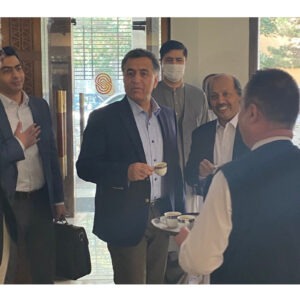
The now-infamous image of ISI chief Faiz Hameed, in the Pakistan Embassy in Kabul with a cup of tea in hand, taken just before the Taliban announced its government, is well known.
However, the Taliban once again soured its ties with its 2nd patron — Pakistan. Islamabad has grown increasingly frustrated over the recent militant activities carried out by Tehreek-e-Taliban Pakistan (TTP), which operates in the Khyber Pakhtunkhwa region. The TTP maintains strong links with its parent organization, the Taliban, underscoring their shared Pashtun identity. Afghanistan, for its part, claims that Pakistan’s Khyber Pakhtunkhwa province is historically part of Afghanistan, and the Taliban refuses to recognize the Durand Line.
The recent violent skirmishes that ended Pakistan’s strategic depth in Afghanistan are a direct result of these disagreements with the Taliban. With the support and backing of the Taliban, the TTP has killed several Pakistani soldiers, and reports suggest that Pakistan’s army has lost control of parts of the Khyber Pakhtunkhwa province. The Taliban, after the recent skirmish, threatens to strike Islamabad.
Pakistan, thus, has ended up facing the same fate the United States once did in Afghanistan.
So, what’s there for India in Taliban-ruled Afghanistan?
When Taliban Foreign Minister Amir Khan Muttaqi was welcomed in India, there were dissenting voices, condemning the Taliban’s visit to India, like prominent lyricist Javed Akhtar, who said: “I hang my head in shame when I see the kind of respect and reception has been given to the representative of the world’s worst terrorists group Taliban by those who beat the pulpit against all kind of terrorists. Shame on Deoband too for giving such a reverent welcome to their “Islamic Hero” who is one of those who have completely banned girls education. My Indian brothers n sisters !!! what is happening to us.”
India must exercise caution in its engagement with the Taliban – a prudence that neither the United States nor Pakistan maintained, and one that ultimately cost them dearly.
India has reopened its embassy in Kabul at full capacity, a step that was not taken by the Vajpayee government when the Taliban first came to power.
While re-establishing ties with a Taliban-ruled Afghanistan may be the need of the hour for India, overindulging with an extremist organization should serve as a reminder of Hillary Clinton’s infamous remark once directed at Pakistan:
“You can’t keep snakes in your backyard and expect them only to bite your neighbors. You know, eventually those snakes are going to turn on whoever has them in the backyard.”
That statement, once aimed at Pakistan, should never have to be used for India in the future.
Taliban-ruled Afghanistan should be handled with care. While seeking strategic influence in Afghanistan, India must exercise caution in its engagement with the Taliban.
As an independent media platform, we do not take advertisements from governments and corporate houses. It is you, our readers, who have supported us on our journey to do honest and unbiased journalism. Please contribute, so that we can continue to do the same in future.
