
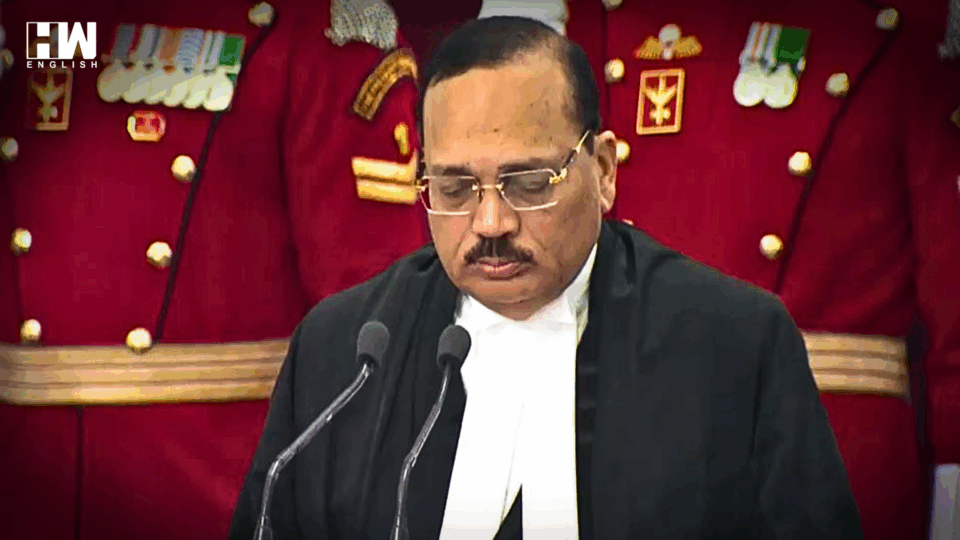
Justice Surya Kant takes charge as 53rd Chief Justice of India at a moment when the court stands before some of the most demanding questions of our time and an institution stretched by both expectation and pressure.
Born 1962. His journey began in a small village in Hisar where he grew up in a modest family. His father was a Sanskrit teacher and the young Surya Kant went on to study law at Maharishi Dayanand University before beginning practice in Hisar and later in Chandigarh. He built his reputation in constitutional and service law, became Advocate General of Haryana in 2000, entered the Punjab and Haryana High Court as a judge in 2004, later led the Himachal Pradesh High Court and joined the Supreme Court in 2019.
He now inherits a docket packed with weighty Constitution Bench matters. These cases cut to the heart of Indian federalism, raising questions about the authority of governors, the reach of central agencies and the rules that govern elections. Several civil liberties petitions also wait for closure, including challenges to laws on national security, digital surveillance and online speech. The court must also address unresolved issues surrounding the reorganisation of Jammu and Kashmir, especially those involving the balance between national authority and regional rights.
The institution itself demands equal attention. Listing and hearing processes need sharper discipline, larger benches must sit regularly and coordination with high courts is essential to address the enormous backlog in trial courts across the country.
Technology will shape his tenure as much as the law. The court will confront disputes involving data rights, digital evidence, algorithm driven decisions and cyber crime, even as it works to modernise its own systems for better access and efficiency.
He will also preside over matters that test the boundaries between the executive and the judiciary and between the centre and the states. These cases carry political consequences regardless of how carefully the court stays within constitutional lines.
His tenure will ultimately be judged by how decisively he steers the court through these large unresolved questions and how strongly he prepares the institution for the demands of a fast changing era.
As an independent media platform, we do not take advertisements from governments and corporate houses. It is you, our readers, who have supported us on our journey to do honest and unbiased journalism. Please contribute, so that we can continue to do the same in future.
