
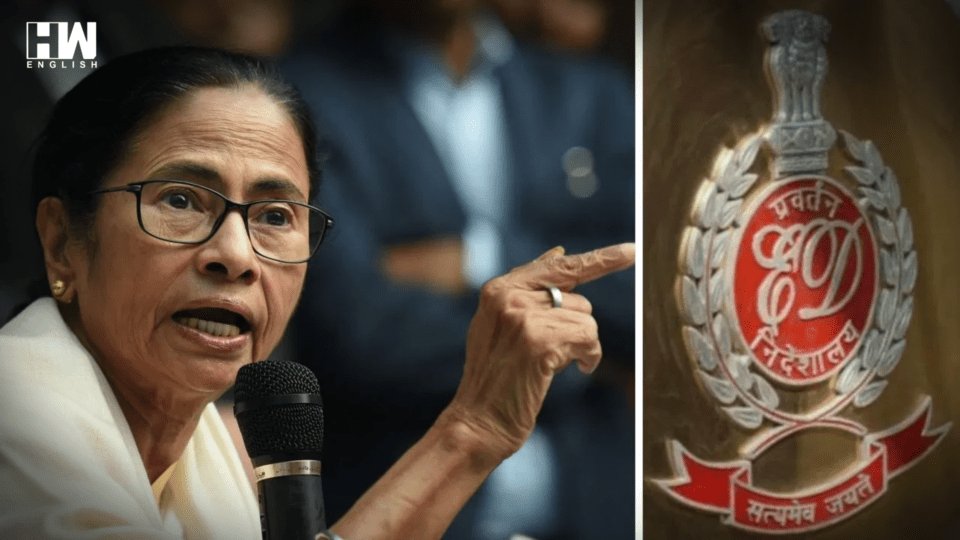
The events of January 8 and 9, 2026 mark a serious moment in India’s constitutional journey. What unfolded in West Bengal was not just a political confrontation, but a direct collision between investigative authority, executive power, and electoral survival.
The recent standoff between the Enforcement Directorate and West Bengal Chief Minister Mamata Banerjee has raised fundamental questions about federal balance. When a Chief Minister physically intervenes in a central agency’s raid on a political consultancy, the distinction between protecting democratic space and obstructing justice becomes dangerously blurred.
From a legal standpoint, the Enforcement Directorate operates under the Prevention of Money Laundering Act, a law that gives it wide powers to trace and seize alleged proceeds of crime. These powers are not designed to adjust to political calendars. However, when the executive steps into an ongoing investigation, removes documents, and decides what can or cannot be taken, it undermines investigative sanctity and judicial authority. It sets a precedent where institutional power is determined by position, not by law.
At the same time, the political and moral context cannot be ignored. Indian Political Action Committee is central to the Trinamool Congress campaign machinery. Raids on such an organisation months before elections inevitably raise concerns about fairness. Even if procedurally justified, the perception of selective timing creates distrust and reinforces the belief that investigative agencies are being used to influence the political contest.
The disorder that followed in the Calcutta High Court only deepened the crisis. When courtrooms echo the chaos of street politics, the judiciary’s role as a neutral and final arbiter is weakened. Institutions lose credibility when reason is drowned out by outrage.
My take is simple. When central agencies are perceived as weapons against political opponents, democracy stops being fair. When constitutional authorities use their power to block or interfere with investigations, the rule of law begins to break down. Both trends are dangerous, and together they weaken the very foundations of the republic.
What is most worrying is the steady erosion of statesmanship, constitutional respect, and shared civic values. If we continue to excuse every excess simply because it is committed by our preferred political party, we are not being patriots. We are choosing a political party over our country.
Dear Readers,
As an independent media platform, we do not take advertisements from governments and corporate houses. It is you, our readers, who have supported us on our journey to do honest and unbiased journalism. Please contribute, so that we can continue to do the same in future.
As an independent media platform, we do not take advertisements from governments and corporate houses. It is you, our readers, who have supported us on our journey to do honest and unbiased journalism. Please contribute, so that we can continue to do the same in future.
