
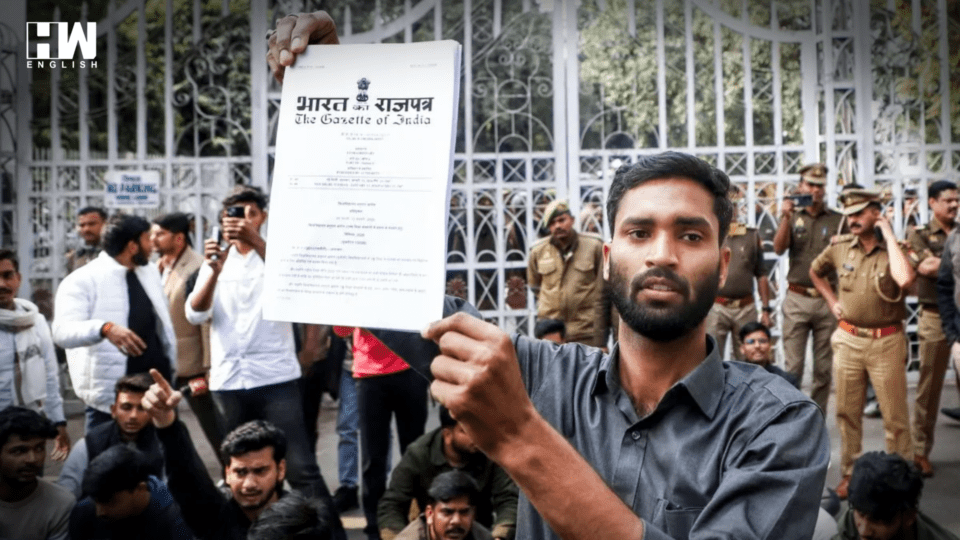
The UGC’s Promotion of Equity in Higher Education Institutions Regulations, 2026 is being projected as a moral correction to caste discrimination on campuses. In reality, it represents something far more consequential. It is a centralisation of power inside universities, backed by punishment, surveillance, and political signalling.
There is no denying that caste discrimination exists and failure was enforcement. The 2012 rules were weak and largely ignored. The 2026 regulations fix that problem decisively. But in doing has it become a camouflaged watch dog, a coercive control mechanism in the campuses?
By expanding caste based discrimination to include OBCs along with SCs and STs, the rules correct a long standing omission. But they also reveal political timing. OBCs are not just a social category. They are an electoral force. Their inclusion, after being left out in earlier drafts, is as political as it is principled.
The real shift lies in the creation of Equity Squads. These bodies can act without formal complaints, summon students and faculty, access private institutional records, and recommend punitive action even before guilt is established. Vice Chancellors and Principals are personally liable if they hesitate. Compliance is no longer optional. It is enforced through fear of institutional punishment. Supporters call this empowerment. Critics call it overreach.
The deeper problem is asymmetry. The rules create powerful protection mechanisms for reserved categories but offer no comparable safeguards for General Category students against false complaints or misuse. Equality that flows only in one direction rarely produces harmony. It produces resentment, and backlash.
The ‘smart political’ context cannot be ignored. The Supreme Court had recently pulled up the University Grants Commission for poor enforcement. The National Education Policy demands tighter central oversight. These regulations satisfy both, while allowing the government to wear the mantle of social justice.
Smart politics, perhaps. But universities are not police states. They are meant to be spaces of debate, dissent, and intellectual risk. When surveillance replaces trust and accusation replaces dialogue, discrimination may reduce on paper but freedom shrinks in practice.
Now a PIL before the Supreme Court of India will decide the next chapter. Should anti discrimination law be caste specific or caste neutral? Until then, campuses will remain on edge.
As an independent media platform, we do not take advertisements from governments and corporate houses. It is you, our readers, who have supported us on our journey to do honest and unbiased journalism. Please contribute, so that we can continue to do the same in future.
