
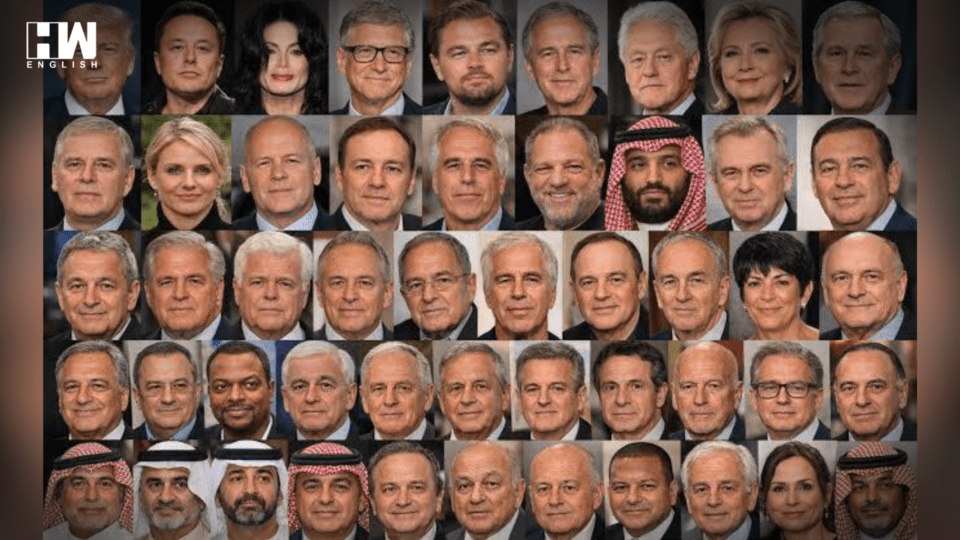
Normally, I make a conscious effort to keep my emotions out of my writing. I was never confident that anything I wrote on Epstein Files would emerge purely from rational thought. There was always the risk that emotion would overpower. For a long time, I avoided writing or speaking about it altogether. So if this piece feels heavier, more emotionally charged than usual, I ask for your understanding.
To my mind, Jeffrey Epstein is no different from Adolf Hitler, Idi Amin, Pol Pot, and other embodiments of absolute evil. A pedophile. A sexual predator. A man accused of systematic abuse, blackmail, and crimes so dark they defy comprehension. Some allege intelligence links. For me, labels are irrelevant. He represents the Devil. Period.
By now, most readers are aware of what allegedly took place on his island. The abuse. The grooming. The influence peddling. The carefully built ecosystem of silence and complicity. What disturbs me far more than Epstein himself is the moral vacuum this saga exposes among the world’s elites.
These are not fringe figures. These are people who shape global policy, technology, economies, and narratives. Names that repeatedly surface include Donald Trump, Bill Clinton, Bill Gates, Prince Andrew, and Elon Musk, among others. When individuals of this stature appear anywhere near a man like Epstein, it stops feeling like isolated moral failure. It begins to resemble a disturbing pattern. At times, it feels like a dystopian film unfolding in real life, where the world is quietly steered by people who have lost their moral compass.
India’s Prime Minister Narendra Modi has also been mentioned in the broader Epstein discourse, and this demands investigation rather than shallow allegation. The reference stems from a 2017 email Epstein sent to a Qatari official, in which he claimed to have advised the Prime Minister during his Israel visit that year, allegedly to “please” then US President Donald Trump. Crucially, unlike other figures whose names surface across years of flight logs, photographs, and corroborated testimonies, Modi’s mention is confined to Epstein’s own private correspondence. It appears more like name dropping or self importance than evidence of any direct association or presence on the island. Allegations must always be examined, but suspicion without proof cannot be treated as guilt.
Perhaps the most damning aspect of this entire episode is the role of American authorities. Epstein and his island were not a secret. Agencies knew. Law enforcement knew. Yet for years, nothing was done. They chose silence. They chose convenience. They chose to look away. This raises an uncomfortable question. What moral authority remains when those who lecture the world on law, order, and human rights knowingly ignore crimes of this magnitude?
Yes, the Epstein Files Transparency Act eventually led to the release of millions of documents. But even here, the truth feels rationed. Vast sections remain redacted. Public scrutiny is constrained. Whistleblowers have spoken, but the delayed nature of accountability has blunted its impact. Time, influence, and legal maneuvering may ensure that many of the most powerful individuals implicated will never face real consequences.
If this is the moral state of those who run the world, shape its systems, and define its future, we must ask ourselves a hard question. What kind of world are we becoming? And how dark is the road we are choosing to walk?
This incident doesn’t just ask “who is guilty?” but also a very significant question – “who is leading us?”
As an independent media platform, we do not take advertisements from governments and corporate houses. It is you, our readers, who have supported us on our journey to do honest and unbiased journalism. Please contribute, so that we can continue to do the same in future.
