
I have written and spoken about politics and business for years. But some issues sit deeper than ideology. Education is one of them.
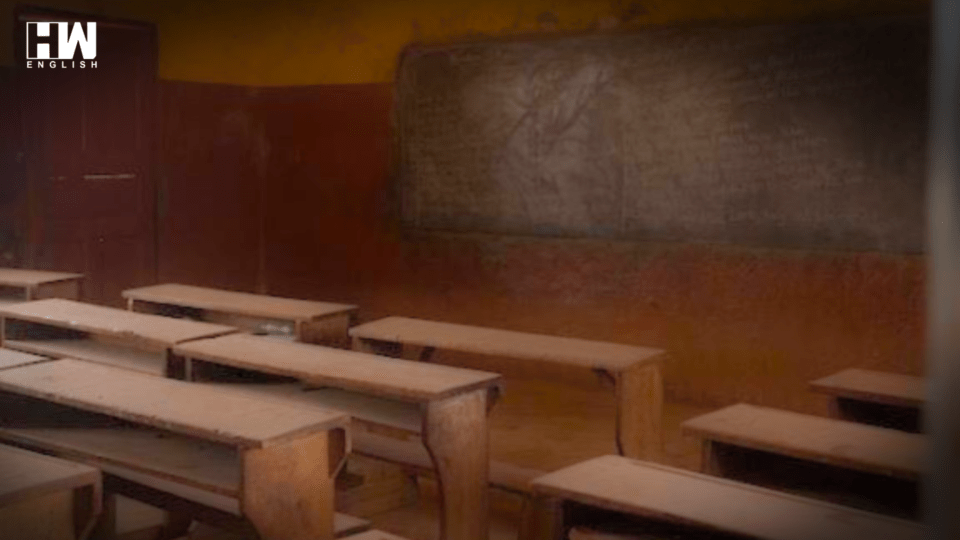
Between 2020 and 2025, India quietly shut down close to 20,000 government schools. We moved from about 10.32 lakh schools in 2020–21 to nearly 10.14 lakh by 2024–25. Over the last decade, almost 90,000 government schools have been shut or merged.
This is officially described as rationalization. On the ground, it feels more like withdrawal.
A village school is not just a building. It often decides whether a child stays in school or drops out forever. When schools are merged, children are asked to walk two to three kilometres more. For many poor families, that distance quietly ends education. For girls, it often ends it permanently.
Alongside this, another pillar has been shrinking almost unnoticed. The midday meal.
In just five years, PM Poshan has stopped in over 84,000 schools, a 7.5 percent drop. The meal was never only about food. For many families, it was the reason children came to school at all.
When the meal weakens, attendance drops. When attendance falls below 15 to 20 students, the school is labelled unviable and shut or merged. This is not coincidence. It is a cycle repeating itself.
Uttar Pradesh, Madhya Pradesh and Assam together account for nearly 70 percent of schools that lost midday meals. These are also the states witnessing the highest number of school mergers. The connection is hard to ignore.
We celebrate Digital India, yet many government schools still function with broken toilets, no drinking water, and unsafe buildings. Over one lakh schools run with just one teacher, juggling classes, paperwork, and meal duties. Teacher shortages are no longer a policy concern. They are a daily strain.
Education is not an expense to be optimized. It is the foundation of a nation. If government schools disappear, who do you think will be shut out of India’s future?
Dear Readers,
As an independent media platform, we do not take advertisements from governments and corporate houses. It is you, our readers, who have supported us on our journey to do honest and unbiased journalism. Please contribute, so that we can continue to do the same in future.
As an independent media platform, we do not take advertisements from governments and corporate houses. It is you, our readers, who have supported us on our journey to do honest and unbiased journalism. Please contribute, so that we can continue to do the same in future.
