
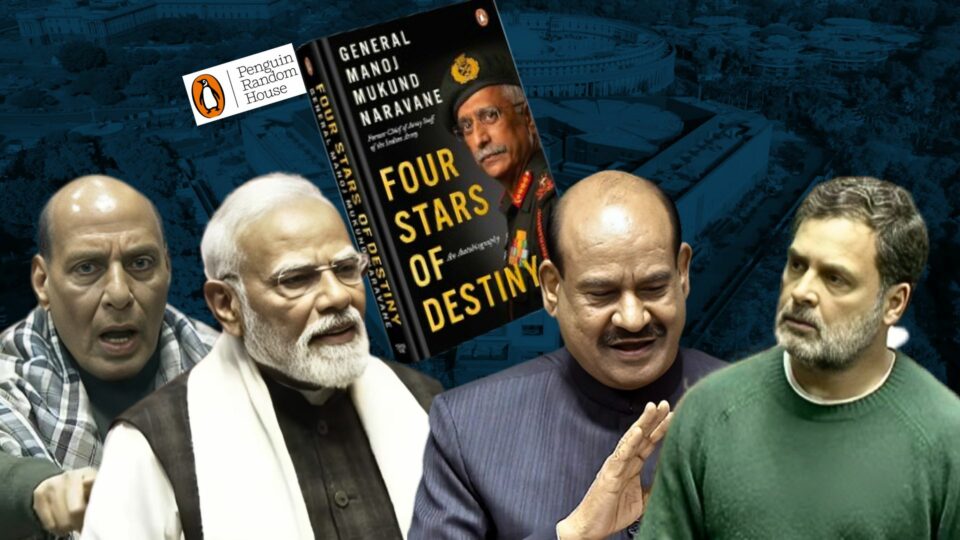
The Budget Session of 2026 opened with the promise of serious debate on the Union Budget presented by Finance Minister Nirmala Sitharaman. Instead, the Lok Sabha descended into repeated adjournments, sloganeering, and suspensions. The spark was Leader of Opposition Rahul Gandhi’s attempt to quote passages from former Army Chief General M.M. Naravane’s yet-to-be-published memoir Four Stars of Destiny. The excerpts allegedly described a moment in the 2020 Ladakh standoff when the Army Chief sought political direction from Defence Minister Rajnath Singh and National Security Adviser Ajit Doval, only to receive the message from Prime Minister Narendra Modi: “Do what you think is right.” The government objected vehemently, arguing that an unpublished manuscript could not be cited in the House.
What followed was a two-week cycle of disruption, police notices to the publisher over leaked PDFs, and finally, on 10 February, a notice by the Congress-led opposition for the removal of Speaker Om Birla. Eight Congress MPs were suspended for the remainder of the session. The Trinamool Congress refused to sign the removal notice, preferring a “constructive” approach to raise Bengal-specific issues. By the time Rahul Gandhi was finally allowed to speak on the Budget, the session’s most productive days had already been lost to procedural warfare.
The Modi government escaped sustained questioning on the Budget’s glaring shortfalls: stagnant education spending, reduced fertiliser subsidy, deepening farm distress, and complaints from opposition-ruled states about discriminatory fund allocation. The Congress walked into a classic trap. The BJP did not need to defend the Budget; it simply let the opposition exhaust itself on issues the ruling party could easily frame as matters of national security and parliamentary propriety. The result was a session in which the government passed key business amid the din while the opposition’s substantive critique never reached the people outside the four walls of Parliament.
Manufactured Controversy Over Naravane’s Unpublished Memoir:
The government could have dismissed the memoir reference as a technical violation and moved on, the way it has brushed aside dozens of earlier allegations. Instead, it chose to escalate. Delhi Police registered a case under the IT Act and criminal conspiracy provisions over the circulation of unauthorised PDFs. The publisher issued clarifications that the book had not been formally released.
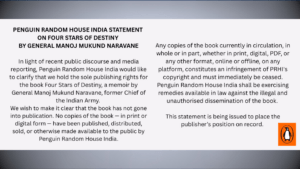
General Naravane himself endorsed the publisher’s position. The BJP’s strategy was transparent: turn a potentially embarrassing revelation about political decision-making in 2020 into a question of protocol and national security. The Congress took the bait. Rahul Gandhi brandished printouts and demanded discussion. The House was repeatedly adjourned.
The opposition spent days defending its right to quote an unpublished book rather than forcing the government to answer why defence modernisation funds remain under-utilised or why buffer zones along the LAC continue to restrict Indian patrols years after the initial disengagement. By making the memoir the centrepiece of its protest, the Congress handed the BJP a ready-made narrative: the opposition is more interested in scoring political points than in safeguarding institutional norms. The ruling party knew exactly how Rahul Gandhi’s politics works.
Once the Leader of Opposition senses personal affront or institutional bias, the Congress machinery shifts entirely to that single issue. Precious legislative time was consumed, and the government’s attention was diverted from the Budget’s weaknesses to a manufactured row over an unpublished book. The BJP won the round without firing a single substantive shot on policy.
Speaker’s Conduct, Partisan Precedent and the Real Purpose of Parliament:
No one can seriously applaud the Speaker’s handling of the session. Opposition leaders, including Rahul Gandhi, were repeatedly interrupted or disallowed from speaking during the Motion of Thanks to the President’s address. Eight Congress MPs were suspended. The notice for Speaker Om Birla’s removal cited “blatantly partisan” conduct.
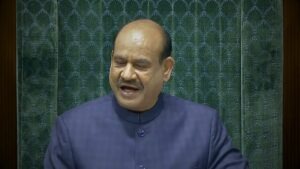
Yet the Congress knows better than most that Speakers in India have long functioned in a partisan manner, regardless of which party is in power. State Assemblies ruled by the Congress, the Trinamool Congress, the DMK and others have witnessed similar complaints from their own oppositions. The question is not whether the Speaker was fair; the question is whether the Budget Session was the place to fight that battle to the exclusion of everything else.
Parliament is the forum where the opposition is supposed to extract answers on policy, demand accountability for budgetary allocations and highlight failures that affect citizens. Instead, the Congress turned the House into a battlefield over its own right to speak. The BJP’s calculation was simple: keep the opposition entangled in procedural disputes so that the real questions never get asked. How much of the ₹1.32 lakh crore agriculture allocation will actually reach farmers when fertiliser subsidy has been cut by nearly ₹16,000 crore?
Why has the allocation for agricultural research and education been reduced in real terms? Why are opposition-ruled states repeatedly complaining of delayed or reduced central funds? These questions required sustained, focused questioning, not daily adjournments and sloganeering. The more the Congress disrupted, the less the government was forced to explain.
Regional parties such as the Trinamool Congress openly objected to the Congress-led ruckus precisely because they wanted space to raise state-specific grievances. The strategy of constant confrontation ensured that neither the Congress nor its allies could corner the government on issues that matter on the ground.
Rahul Gandhi’s Speech: Global Rhetoric at the Cost of Domestic Reality:
When Rahul Gandhi finally spoke on the Budget, he delivered a wide-ranging critique of the India-US interim trade deal, warning that it compromised energy security, data sovereignty and the interests of farmers. He spoke of global instability, the era of war, Donald Trump’s tariffs and the dangers of artificial intelligence. These are important subjects. But the Budget Session is primarily about the Union Budget. The education outlay remains stuck at roughly ₹1.04 lakh crore, far below the 6 per cent of GDP repeatedly promised. Thousands of schools still lack basic infrastructure. Farm distress continues, with reports of distress sales and inadequate crop insurance payouts.
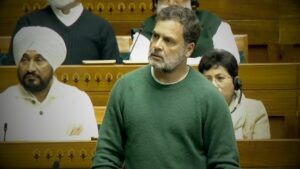
Opposition-ruled states, particularly in the south and east, have repeatedly alleged that central schemes are being used to reward BJP-governed states while punishing others. Rahul Gandhi did not compare allocations to Congress-ruled states such as Karnataka or Himachal Pradesh, nor did he press the government on why fiscal devolution remains frozen at 41 per cent despite rising state expenditures on health and education.
The obstruction faced by the Leader of Opposition is real and must be condemned. But the BJP is not obstructing him because it fears his words on defence or international relations. It knows that Rahul Gandhi’s style often shifts the debate to personality and narrative rather than granular policy critique. The government’s strategy is to let the opposition believe it is being silenced because it is “dangerous,” while quietly advancing its legislative agenda amid the chaos.
The longer the ruckus continues, the fewer questions the Treasury Benches have to answer. The Trinamool Congress’s reluctance to join the Speaker removal move was a clear signal: Bengal wanted to discuss central neglect of the state, not become collateral damage in the Congress-BJP duel.
Congress’s Deeper Problem: Misreading the Battlefield:
The Congress’s problem today is not organisational weakness alone; it is a consistent failure to distinguish between issues that resonate inside Parliament and those that resonate outside. The “vote chori” campaign alleging EVM tampering generated headlines but produced no electoral dividend in Bihar or elsewhere. People vote on jobs, prices, farm incomes and local governance, not on abstract institutional grievances that remain confined to television studios and the well of the House. Every time the Congress allows itself to be sucked into a single dramatic issue, the Modi government escapes scrutiny on the mounting crises that affect ordinary citizens. The Budget 2026-27 offered multiple openings: stagnant social-sector spending, rising inequality, complaints of federal discrimination, and the absence of any meaningful relief for farmers or youth. These are issues that cut across party lines and can force even ruling-party backbenchers to squirm. Instead, the opposition chose battles the BJP knows how to neutralise.
Parliament is larger than the personal contest between Rahul Gandhi and Narendra Modi. It is the arena where 1.4 billion citizens expect their representatives to demand answers on education, health, agriculture and equitable development. When the opposition spends days fighting over the right to quote an unpublished book or the conduct of the Speaker, it reduces Parliament to an ego arena. The real losers are the citizens who expect the opposition to corner the government on the Budget’s failures, not on procedural flashpoints. The Congress still has the numbers and the platform to be an effective opposition. What it lacks is the discipline to pick battles that actually hurt the government where it is vulnerable, on the ground, among the people. Until that changes, the Modi government will continue to turn every parliamentary session into a masterclass in political judo: using the opposition’s own energy against it.
(Sayantan Ghosh is the author of The Aam Aadmi Party: The Untold Story of a Political Uprising and Its Undoing. He is on X as @sayantan_gh.)
As an independent media platform, we do not take advertisements from governments and corporate houses. It is you, our readers, who have supported us on our journey to do honest and unbiased journalism. Please contribute, so that we can continue to do the same in future.
