
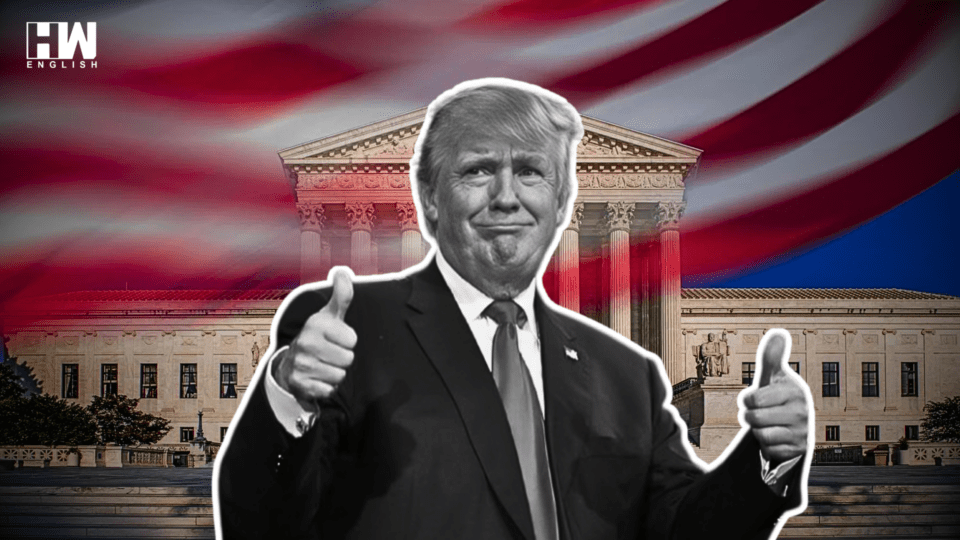
On February 20, 2026, the Supreme Court of the United States struck down the main legal basis used by President Donald Trump to impose sweeping reciprocal tariffs. In a 6 to 3 decision, the Court held that the International Emergency Economic Powers Act does not give the President authority to levy broad tariffs. That power rests with Congress.
The immediate impact is clear. The high reciprocal tariffs introduced in April 2025, in some cases up to 25 percent and 50 percent, are legally invalid. US tariffs on many Indian goods are expected to revert to pre April 2025 levels, which were largely between 0 percent and 3.5 percent.
There is, however, a complication. Within hours, the administration announced a new 10 percent global tariff under Section 122 of the Trade Act of 1974 and indicated that other legal routes may be used to maintain trade pressure. So the tariff environment remains uncertain.
This directly affects the recently announced India US trade framework.
The understanding earlier this month was based on a trade off. The US would reduce its reciprocal tariffs from 50 percent to 18 percent. In return, India would offer significant concessions: zero tariff access for several US goods, a stated intention to import USD 500 billion worth of American products over five years, steps to ease non tariff barriers, and commitments regarding curtailment of Russian oil purchases.
Now the central incentive has shifted. If US tariffs are already falling back to near zero because of a court ruling, why should India make large, binding concessions in exchange for a benefit that may no longer depend on executive action?
The USD 500 billion import commitment alone has major implications for energy sourcing, manufacturing and long term procurement strategy. Added to that are the implications of reducing access to discounted Russian crude. Such commitments require legal certainty and policy stability on the other side.
The Indian delegation currently in Washington therefore faces difficult choices. It can pause and wait for clarity on the new US tariff measures. It can renegotiate for additional gains in areas like services mobility or technology access. Or it can rework the agreement to ensure reciprocity under a stable and legally durable framework.
The larger question is one of negotiating posture. Will the Modi administration insist on parity and reciprocity? Or will it proceed on the assumption that strategic alignment with Washington justifies economic concessions even without immediate returns?
Trade agreements must rest on enforceable commitments and predictable policy. Given the scale of the proposed changes, the Government of India would need to clearly explain how it plans to proceed in light of the evolving US legal position.
As an independent media platform, we do not take advertisements from governments and corporate houses. It is you, our readers, who have supported us on our journey to do honest and unbiased journalism. Please contribute, so that we can continue to do the same in future.
