
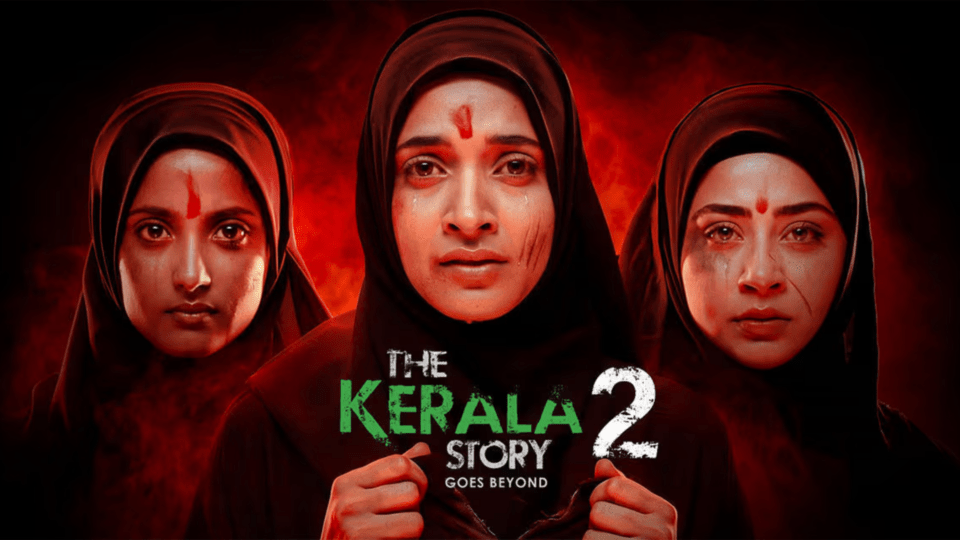
I am completely against banning any film, book, or any form of expression. The right to express is a fundamental human right. I respect it, even when I strongly disagree with what is being said. I believe our society is mature enough to decide what is right and what is wrong, what is good and what is not.
But the right to express also comes with the right to question, protest, and critique. That is the right I am using now.
As a Malayalee, I feel the need to speak when I see what I believe is a propaganda film that reduces a complex state and its people into a stereotype for political and commercial gain. This is not about suppressing art. It is about protecting dignity.
Let me introduce a term. Lacre. Lazy creative.
Lacre is when something is presented as creative work but lacks depth, research, imagination, and integrity. It is not made to explore truth or tell a powerful story. It is made to ride a wave. It plays to the gallery. It senses the mood of the majority and amplifies it. Not because it believes in it. But because it sells.
When you play to the gallery, you do not need courage. You need timing. You use anger, division, fear, and slogans. You align with power. You make noise. The audience reacts. The box office grows. The creators profit. What happens to the social fabric or to the people who are portrayed unfairly becomes secondary.
One simple way to identify Lacre is to see whether it ever challenges the dominant narrative. Does it question the majority view, or does it simply echo it? If it always flows with the strongest current, chances are it is not art. It is strategy.
In India today, popularity often comes before process. In cinema. In sports. Even in education. Align with the dominant ideology and you move ahead faster. The need to align sometimes becomes bigger than the need to create something honest.
Kerala has always been a state that values debate. We take pride in our literacy, our political awareness, our social indicators. Yet when we are mocked, misrepresented, or reduced to caricatures, our response is often divided. Sometimes we even support narratives that hurt us, as long as they hurt someone else more. In doing so, we forget that the damage is shared.
Ask yourself this. If Malayalees were seen as a community that would firmly defend its reputation, would a film like Kerala Story be made so casually? And a sequel released around the time of state elections? Would this happen so easily with every other state? We are often taken for granted. We rarely respond in one voice.
This is not about being defensive. It is about self respect.
I am aware that debating such films also gives them attention. But silence also sends a message. I would rather speak and risk adding to the noise than stay quiet and accept a narrative I believe is unfair.
To my fellow Indians, I say this. Learn to identify Lacre. Do not reward content that feeds on division. Do not encourage hate driven storytelling in the name of entertainment. We have already seen how hatred can build political careers. Let us not allow it to define our cinema, our classrooms, or our playgrounds.
Creativity is one of India’s greatest strengths. Culture is our real power. Identity is not something to trade for quick popularity.
Think about what we are encouraging. And think about the long term cost.
As an independent media platform, we do not take advertisements from governments and corporate houses. It is you, our readers, who have supported us on our journey to do honest and unbiased journalism. Please contribute, so that we can continue to do the same in future.
