
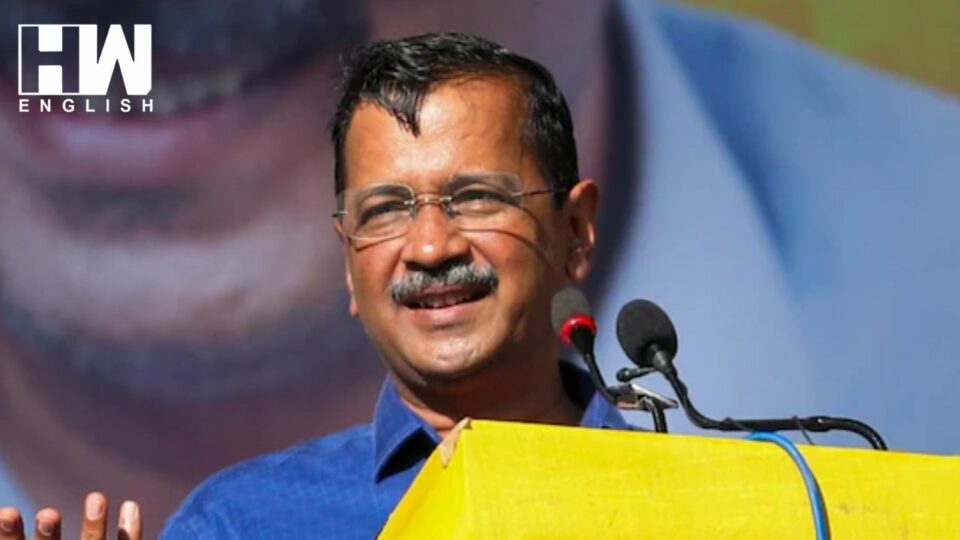
On February 27, 2026, a Delhi court discharged Arvind Kejriwal, Manish Sisodia and 21 others in the high-profile Delhi excise policy case, delivering a sweeping clean chit that has sent shockwaves through Indian politics. The court found no overarching conspiracy or criminal intent in the 2021-22 liquor policy framed by the Aam Aadmi Party government. It ruled that the Central Bureau of Investigation failed to establish even a prima facie case, noting that the chargesheet suffered from internal contradictions striking at the root of the alleged conspiracy theory. Serious allegations, the court emphasised, require cogent evidence, not conjecture or statements from approvers used to fill investigative gaps—a practice it warned could violate constitutional principles if unchecked.
This verdict comes after years of turmoil. The case, triggered by a complaint routed through the Lieutenant Governor, led to Sisodia spending 17 months in jail and Kejriwal nearly five months behind bars. It unfolded amid the run-up to the February 2025 Delhi assembly elections, where the Bharatiya Janata Party stormed back to power with 48 seats after 27 years, reducing the Aam Aadmi Party to just 22. Kejriwal lost his own New Delhi seat. What was projected as a massive corruption scandal—alleging kickbacks of over Rs 100 crore funneled to fund AAP campaigns in Punjab and Goa—now stands exposed as lacking any material basis. No recoveries were made from the top leaders, and the policy’s administrative changes were deemed legitimate deliberations rather than criminal acts.
The implications stretch far beyond one party. For the Aam Aadmi Party, built on the promise of eradicating corruption, the case had become an existential crisis. For the Bharatiya Janata Party, which has overseen a string of high-profile actions by central agencies against opposition figures nationwide, this marks a rare judicial pushback. The acquittal does not merely close a file; it dismantles a narrative that weakened a rival and raises uncomfortable questions about the weaponisation of institutions. Four key reasons explain why this verdict will reshape Aam Aadmi Party politics permanently while forcing a rethink of CBI and Enforcement Directorate cases against opposition leaders across the country.
Unmasking a Manufactured Narrative
The court’s order lays bare how the liquor policy case was less about evidence and more about narrative-building. The probe originated from a report by the Delhi Chief Secretary forwarded to the Lieutenant Governor, who referred it to the CBI. Allegations centred on procedural lapses, cartelisation and undue benefits to private players, supposedly causing losses exceeding Rs 580 crore. Yet the court found the CBI’s voluminous chargesheet riddled with lacunae, misleading averments and reliance on approver statements to stitch together a conspiracy that simply did not exist. It explicitly held that Kejriwal’s role as a supposed “key conspirator” could not be sustained without material, and Sisodia faced no recovery or direct evidence of involvement.
This was not an isolated investigation. The Bharatiya Janata Party successfully used the Lieutenant Governor’s office and central agencies to keep Aam Aadmi Party leaders on the defensive for years. Kejriwal was arrested in March 2024, Sisodia earlier; AAP MP Sanjay Singh and others followed. The party’s top leadership spent critical months in custody or fighting legal battles precisely when governance and campaigning demanded full attention. The Bharatiya Janata Party capitalised on this, portraying the Aam Aadmi Party as corrupt and turning public discourse away from the party’s flagship schemes in education, health and power subsidies. The strategy worked electorally: the Aam Aadmi Party’s vote share dropped sharply in 2025, and the Bharatiya Janata Party returned to power in Delhi.
The verdict now vindicates the Aam Aadmi Party’s long-standing claim that the case was political vendetta. It establishes a precedent showing how agencies can be deployed to harass opposition leaders, jail them under stringent laws and erode their credibility before elections. For the Aam Aadmi Party, this is redemption; for Indian democracy, it is a cautionary tale about the dangers of institutional capture. The clean chit does not erase the damage already inflicted, but it arms the party with moral high ground to call out similar tactics elsewhere.
Rebuilding Credibility
The Aam Aadmi Party rose to power in Delhi in 2015 and consolidated it in 2020 on an uncompromising anti-corruption platform. The liquor policy case struck at the very heart of that identity. For years, the Bharatiya Janata Party painted Arvind Kejriwal, Manish Sisodia and the party’s entire leadership as corrupt, using the arrests to dominate headlines and demoralise grassroots workers. The party’s organisational machinery in Delhi suffered immensely. Leaders were forced into defensive mode, with Kejriwal and Sisodia often unable to campaign freely. Post the 2025 defeat, the Aam Aadmi Party’s top brass had little choice but to regroup and focus energies elsewhere, including strengthening bases in Punjab, while Delhi’s cadre felt the sting of repeated scandals.
The court’s finding of no criminal intent or conspiracy changes the script dramatically. Kejriwal can now stand before Delhi’s voters and declare with judicial backing that he and his party were targeted not for wrongdoing but for their politics. This clean chit restores the anti-corruption narrative that defined the Aam Aadmi Party from its inception. Grassroots workers, who once defended leaders amid relentless attacks, now have concrete proof that the allegations were baseless. The party can pivot from damage control to aggressive outreach, highlighting its governance record untainted by proven corruption.
Electorally, this verdict hands the Aam Aadmi Party a powerful tool for revival. Delhi’s politics is cyclical; the Bharatiya Janata Party’s 2025 win, though decisive, was aided by the shadow of cases that no longer hold. With Kejriwal and Sisodia free of legal overhang, the party can reclaim the streets, rebuild trust among its core supporters and prepare for future contests—be it municipal polls or the next assembly election—with renewed vigour. The acquittal does not just rehabilitate individuals; it resurrects the Aam Aadmi Party’s foundational brand, ensuring its politics will be defined by policy delivery rather than perpetual legal defence.
Judicial Pushback on Investigative Overreach
The verdict carries profound legal significance beyond the Aam Aadmi Party. For years, opposition leaders nationwide have faced prolonged incarceration under the Prevention of Money Laundering Act and other stringent statutes that impose near-impossible conditions for bail. Kejriwal and Sisodia themselves endured months in jail despite the absence of any trail of money or direct evidence. The court has now ruled that the entire foundation of the case was flawed, criticising the CBI for building a conspiracy on conjecture and approver testimony. This is the judicial rebuke long awaited in Indian jurisprudence.
By discharging the accused at the charge-framing stage itself, the court has underscored that agencies cannot lower the threshold of evidence merely because the law tilts heavily in favour of the prosecution. The observations on internal contradictions in the chargesheet and the misuse of approvers to implicate additional persons set a benchmark. They expose how the Prevention of Money Laundering Act’s twin conditions for bail—requiring the accused to prove innocence—can be exploited when the underlying case itself lacks substance. Similar dynamics have played out in multiple cases against opposition figures under the current regime.
This precedent will encourage higher courts to scrutinise CBI and Enforcement Directorate probes more rigorously. It opens the door for legislative or judicial review of the Prevention of Money Laundering Act and allied anti-corruption frameworks to prevent their misuse as tools of political suppression. For the first time in recent memory, a court has not only acquitted high-profile leaders but also flagged systemic issues in how agencies function. The ripple effect will be felt in pending and future cases, forcing investigators to rely on evidence rather than narrative, and giving opposition parties stronger legal recourse.
A Stark Warning to the BJP
Finally, the acquittal serves as an eye-opener for the Bharatiya Janata Party. For over a decade, the party has relied on central agencies to keep opposition leaders entangled in cases—from state after state. The liquor policy probe was a textbook example: arrest top leaders, generate sustained negative publicity, weaken the rival organisation and reap electoral dividends. In Delhi, it helped the Bharatiya Janata Party end the Aam Aadmi Party’s decade-long dominance. Yet the court’s verdict demonstrates the limits of this approach. When cases built on weak foundations collapse, the backlash can be severe.
The Bharatiya Janata Party must now confront the reality that politics fought through institutions rather than on the ground is not sustainable. Voters eventually see through manufactured narratives, especially when courts deliver unambiguous clean chits. The party’s own credibility as a champion of good governance suffers when agencies are perceived as selective. This verdict will embolden other opposition parties facing similar probes to fight harder, knowing judicial scrutiny can expose overreach. It also signals to the bureaucracy and investigating officers that accountability cuts both ways—the court has even flagged the need for departmental action against lapses in this very probe.
For the Bharatiya Janata Party, the message is clear: win elections through development, welfare and ideology, not by neutralising rivals via agencies. The liquor policy case’s collapse after years of effort shows that such strategies may deliver short-term gains but risk long-term erosion of public trust in institutions. Indian democracy thrives when political battles remain political, not prosecutorial. The Aam Aadmi Party’s vindication today ensures that lesson will not be forgotten.
(Sayantan Ghosh is a columnist and the author of two books: Battleground Bengal, published by the Penguin Random House, and The Aam Aadmi Party, published by the Juggernaut. He is on X as @sayantan_gh.)
As an independent media platform, we do not take advertisements from governments and corporate houses. It is you, our readers, who have supported us on our journey to do honest and unbiased journalism. Please contribute, so that we can continue to do the same in future.
