
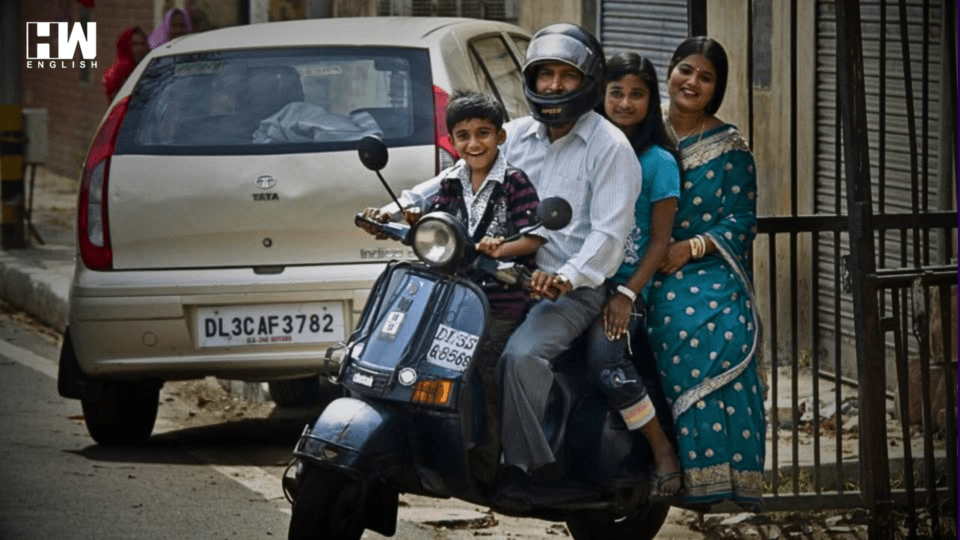
There is one group in India that pays for almost everything but is nobody’s political priority. The Indian middle class.
In practical terms, the middle class can be loosely defined as households earning between ₹5 lakh and ₹30 lakh a year. Within this band there are three broad layers. The lower middle class earns about ₹5 to ₹10 lakh. The core middle class earns about ₹10 to ₹20 lakh. The upper middle class earns about ₹20 to ₹30 lakh. This is the group that keeps the country running.
Every Indian pays taxes in some form. But the middle class pays the most. If not through direct income tax, then through indirect taxes on almost everything they consume. Fuel taxes. GST on goods and services. Property related taxes. Registration charges. Tolls. The list is endless. In effect, the middle class funds a large part of the system.
Yet when it comes to benefits, this same group receives very little in return. Lower income groups receive subsidies and welfare support. And rightly so. They need it. The very rich enjoy influence, access and policy advantages that come with economic power. The middle class gets neither.
No reliable public healthcare. No meaningful support for education. Limited housing assistance. Weak public infrastructure. Slow courts. Uncertain job markets. Overcrowded transport systems. Poor public services in most cities. At almost every interaction with the system, the middle class pays fully but receives poorly.
The political system has its own logic. Governments must visibly serve the poor because their electoral survival depends on it. They cultivate the wealthy because influence and resources come from there. The middle class sits awkwardly between the two. Too comfortable to qualify for welfare. Too ordinary to command influence. In simple terms, the middle class is nobody’s political priority.
And there is a reason for that. The middle class does not exist as an organised political voice. It is divided by caste, religion, region and ideology. As long as these divisions dominate politics, the economic identity of the middle class never becomes a political force. That suits the system perfectly.
For politicians, Identity politics is easy. It creates emotional mobilisation and predictable vote banks. Economic politics is much harder. It requires jobs, business growth, skill development, strong infrastructure and efficient governance. That demands competence and long term commitment.
The day India’s middle class begins to see itself as an economic class rather than a collection of social identities, the political conversation of this country will change completely. If citizens start demanding prosperity instead of identity politics, governments will have no choice but to focus on growth, employment, opportunity and productivity.
Because the real question is very simple. Will India continue to fight over identity, or will it finally start fighting for economic dignity?
Dear Readers,
As an independent media platform, we do not take advertisements from governments and corporate houses. It is you, our readers, who have supported us on our journey to do honest and unbiased journalism. Please contribute, so that we can continue to do the same in future.
As an independent media platform, we do not take advertisements from governments and corporate houses. It is you, our readers, who have supported us on our journey to do honest and unbiased journalism. Please contribute, so that we can continue to do the same in future.
