
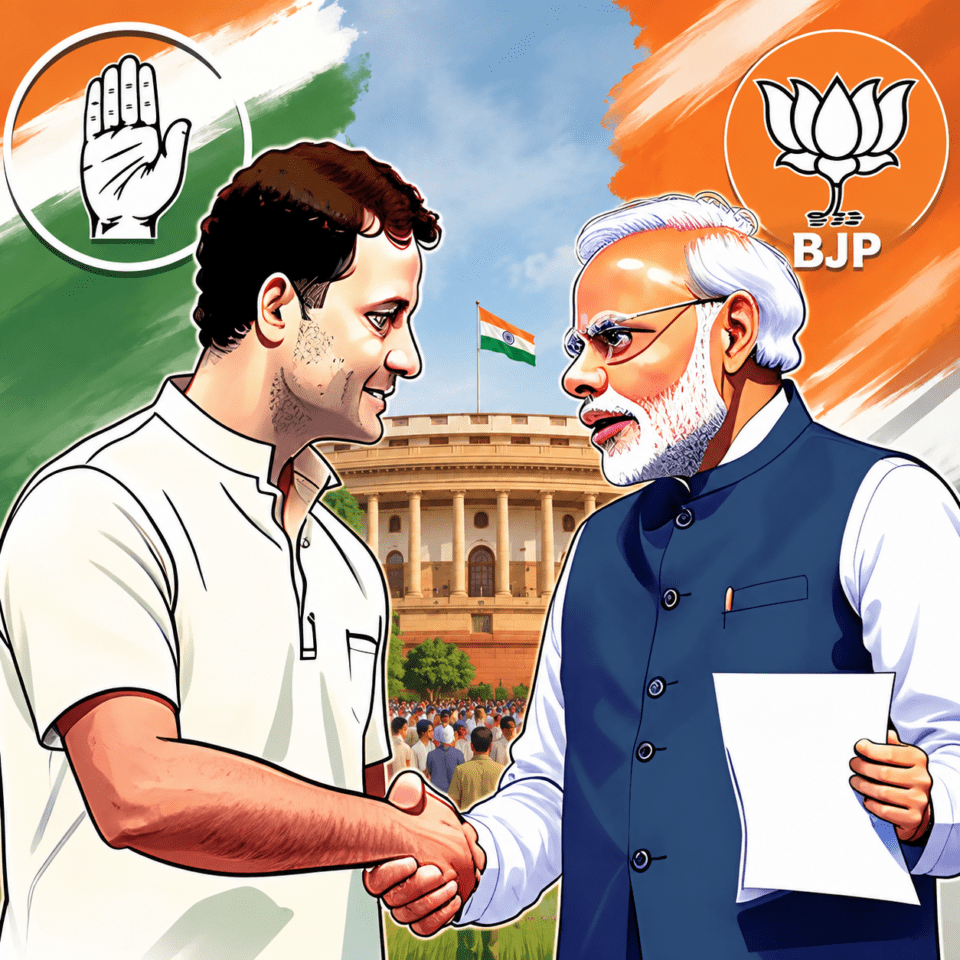
The reason is actually quite simple. Political parties are increasingly spending less time trying to persuade the middle and more time mobilising people who already strongly agree with them.
The fence sitter is no longer the centre of political strategy. The ideological voter is.
One side increasingly seeks to consolidate the Hindu vote, particularly those who strongly identify with Hindutva and the idea of a Hindu Rashtra. The other side increasingly seeks to consolidate those who oppose the BJP, oppose Hindutva or strongly identify with liberal and secular politics.
Both sides have discovered the same political formula. Strengthen the identity of your own camp, intensify the fear of the other camp and keep your supporters emotionally engaged.
The fundamental problem is that political parties are no longer primarily fighting for what is best for the common good of the nation. They are increasingly focused on catering to their target audience and playing to their gallery.
And the result is predictable
More conflict. More criticism. More personal attacks. More attempts to discredit the other side. Very little common ground and even less sense of a shared national goal.
Politics has gradually moved from opposition to enmity. A political opponent is no longer simply someone with a different view. He is increasingly treated as someone who must be defeated, discredited and sometimes even personally destroyed.
The same toxicity has now travelled beyond politics. It is visible in journalism, social media, academia and almost every profession where people publicly express opinions. Right leaning and left leaning journalists increasingly spend as much energy attacking each other personally as they do examining those in power.
This is what happens when politics becomes completely binary.
There is very little incentive to persuade the person in the middle. There is much greater incentive to provoke the person on your side and anger the person on the other side.
But democracy cannot survive indefinitely on outrage.
A healthy democracy needs disagreement, but it also needs persuasion, compromise and the ability to recognise an opponent as a fellow citizen.
When political parties stop competing for the middle and start competing only for the extremes, governance suffers. Problems become secondary to narratives. Solutions become secondary to mobilisation.
As an independent media platform, we do not take advertisements from governments and corporate houses. It is you, our readers, who have supported us on our journey to do honest and unbiased journalism. Please contribute, so that we can continue to do the same in future.
