
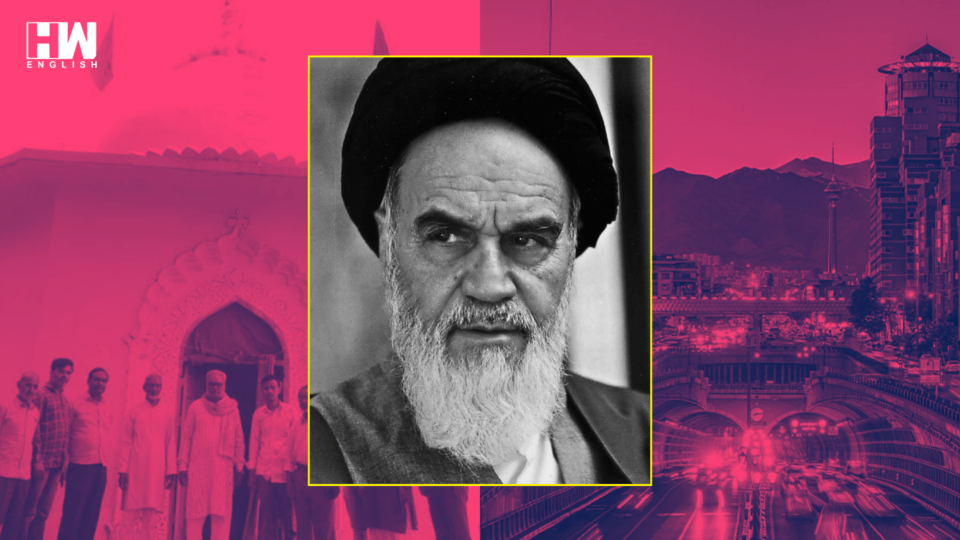
It begins not in Tehran, but in Kintoor, a modest village in Barabanki. In the early 1800s, a young man named Sayyid Ahmad Musavi was born there. Years later, he left India for Najaf to study, eventually settling in Iran. His family carried a name that never let them forget where they came from “Hindi”.
That family would later give Iran Ayatollah Ruhollah Khomeini, the man who led their 1979 Revolution.
Now here’s where the story deepens.
Travel to Lucknow, to the court of the Nawabs of Awadh. In 1825, Nawab Ghazi ud Din Haidar made an extraordinary decision. He lent 1 crore rupees to the British to fund their war in Burma. But instead of asking for repayment, he secured a far more enduring arrangement, a 5 percent annual interest in perpetuity.
He then directed that this income, after certain heirs, be sent to Najaf and Karbala to support scholars, students, and the poor.
What followed is history.
Between 1850 and 1903, over 6 million rupees flowed from Lucknow into these cities. This steady stream of Indian wealth transformed Najaf into the world’s most important center of Shia learning. It attracted scholars from Iran, nurtured generations of clerics, and quietly built the intellectual foundation. Generations of clerics trained there, including those who would later shape Iran’s political destiny.
Even a canal in Iraq, the Hindiyya Canal, stands as a reminder of this forgotten connection, funded by Indian rulers to sustain life and learning.
History rarely announces itself loudly. Sometimes, it travels silently across borders, shaping nations in ways we barely acknowledge. So the next time we look at modern Iran, we should remember that, at least in part, Barabanki and Lucknow helped build it.
Dear Readers,
As an independent media platform, we do not take advertisements from governments and corporate houses. It is you, our readers, who have supported us on our journey to do honest and unbiased journalism. Please contribute, so that we can continue to do the same in future.
As an independent media platform, we do not take advertisements from governments and corporate houses. It is you, our readers, who have supported us on our journey to do honest and unbiased journalism. Please contribute, so that we can continue to do the same in future.
