
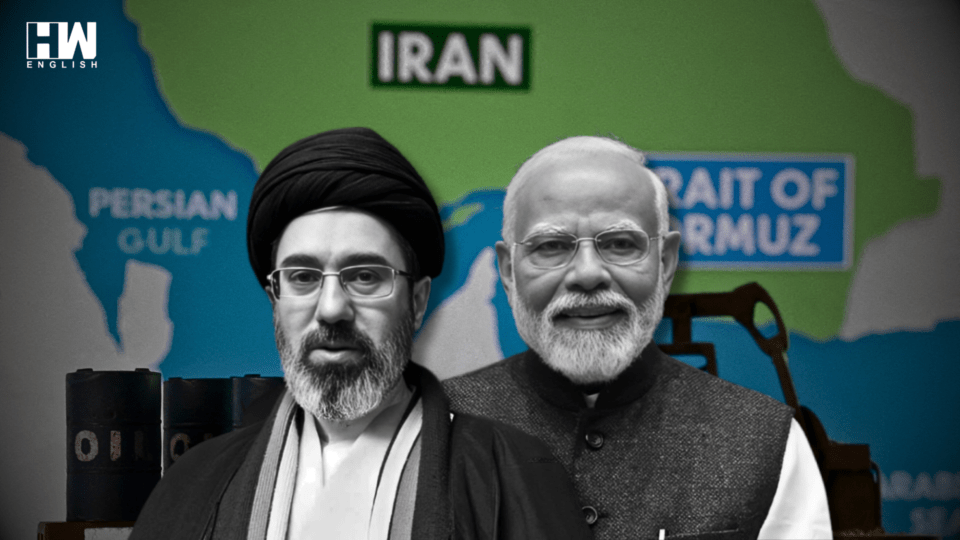
The Strait of Hormuz is a small maritime corridor between Iran on one side and Oman and the UAE on the other. At its narrowest point it is barely 33 kilometers wide, yet it carries nearly one fifth of the world’s oil and gas supply every single day.
Tankers transporting energy from Saudi Arabia, Iraq, Kuwait, the UAE and Qatar must pass through this route before heading to markets in Asia and Europe. Countries like India, China, Japan and South Korea depend heavily on these shipments.
Which is why any tension in this small stretch of water quickly becomes a global issue.
The situation has escalated sharply in recent days amid the ongoing conflict involving Iran, the United States and Israel. Shipping activity in the region has already become tense, with naval deployments and rising risks for oil tankers moving through the area.
In the middle of this crisis, Iran’s Islamic Revolutionary Guard Corps (IRGC) has issued a striking diplomatic signal.
Tehran has indicated that Arab, European and Asian countries could be allowed full freedom of passage through the Strait of Hormuz. But the offer comes with a controversial condition.
Countries seeking guaranteed safe passage for their oil tankers would first have to expel American and Israeli ambassadors from their territories.
In effect, Iran is turning the world’s most critical energy corridor into a geopolitical bargaining chip. This places many countries in a difficult position. On one side lies the security of their energy supplies. On the other lies their diplomatic and strategic relationships with the United States and Israel.
For India, the implications are particularly serious. A large share of India’s crude oil imports travels through the Strait of Hormuz. Any prolonged disruption there would directly affect fuel prices, inflation and economic stability at home. At the same time, it would be strategically unwise for India to damage its relations with the United States and Israel. Which means Iran’s offer, despite its dramatic nature, is unlikely to even be seriously considered in New Delhi.
In simple terms, a narrow waterway thousands of kilometers away quietly influences the price of petrol we pay every day.
As an independent media platform, we do not take advertisements from governments and corporate houses. It is you, our readers, who have supported us on our journey to do honest and unbiased journalism. Please contribute, so that we can continue to do the same in future.
