
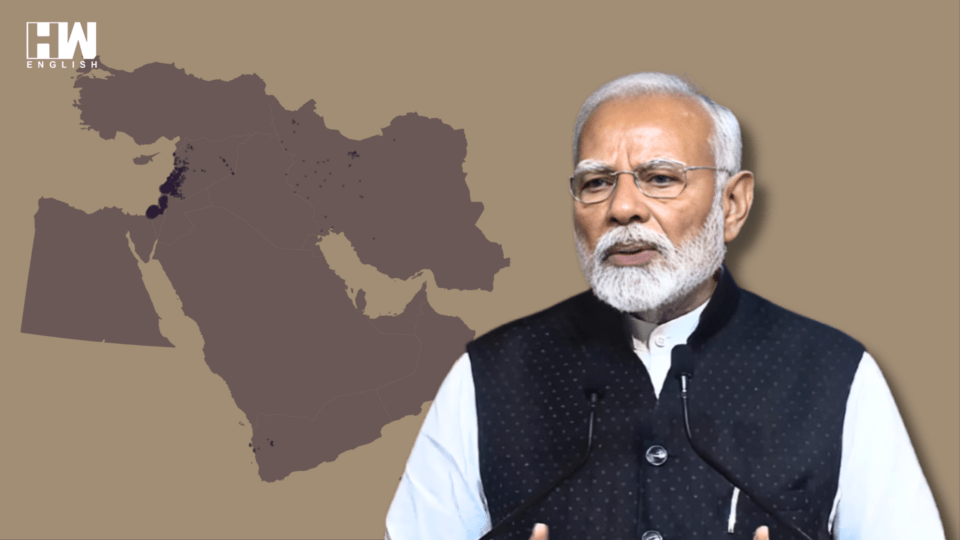
For those who believe that Israel is our brother, and for those who believe the Arab world is our brother, it is time to wake up. Strip away the emotion and look at the structure of these relationships. To many external players, India represents affordable and scalable labour. A population of 1.4 billion that can manufacture, build, service, and support at costs that work for their balance sheets. That is the starting point of the conversation, not civilizational bonding.
A recent panel discussion on i24 News brought this into sharp focus. When asked about Israel’s limited production capacity, one of the speakers said they effectively manufacture in India and need 1.4 billion people to produce for the world. He was not speaking as a diplomat. He was speaking from an industry mindset. And industry conversations are usually more candid than official statements.
In India, the relationship with Israel is often framed around shared threats and security cooperation. That is valid at the strategic level. But in commercial terms, “Make in India” gives foreign firms access to scale and cost advantage. It extends their industrial capacity without forcing them to relocate their core technology base. That is efficient business. It is not brotherhood.
The same realism applies elsewhere. Gulf economies have relied on Indian manpower, labourers for decades. Western corporations depend on Indian engineers and service professionals. The engagement is steady and often mutually beneficial. But it is interest driven. Let’s no get into a relationship narrative. No country structures its economic relationship around sentiment.
We also need to examine our own narrative. We speak of global stature and leadership. In international markets, status is defined by ownership of technology, patents, brands, and supply chains. If design and intellectual property remain abroad while manufacturing happens here, then scale does not equal strategic control.
There is nothing wrong with being a manufacturing hub. It creates jobs and builds capability. The question is whether we are satisfied with that role. If India wants to be treated as a peer, it must move from assembly to original innovation, from contract production to control over core technologies. Until that shift happens, partners may describe us as strategic, but evaluate us primarily as a dependable production base.
After all, are we building their future, or our own?
As an independent media platform, we do not take advertisements from governments and corporate houses. It is you, our readers, who have supported us on our journey to do honest and unbiased journalism. Please contribute, so that we can continue to do the same in future.
