
The government is calling the current India US trade deal historic.
A win. A moment of pride. But if you step back and look at it calmly, it feels like we agreed to almost every American demand. On crude oil, On agriculture. On market access. On rules that could directly affect Indian farmers and producers.
We have seen this before.
In the mid 1960s, India negotiated from a position of weakness, paid a heavy price for it, and then fought its way out of that trap. We did so with a clear promise to ourselves that the country would never be put in that position again.
In the mid 1960s, India’s relationship with the United States entered one of its darkest phases. Back to back droughts left the country dependent on American wheat under PL 480, the so called Food for Peace programme.
What followed was not cooperation. It was control.
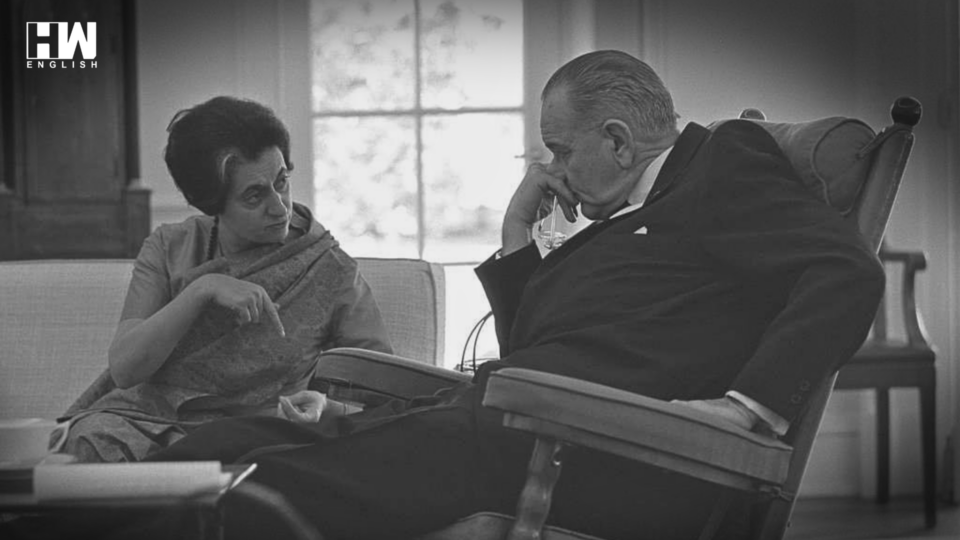
President Lyndon B. Johnson abandoned long term food commitments and introduced what came to be known as the ship to mouth policy. Grain shipments were cleared month by month. Sometimes delayed without explanation. India never knew if the next ship would sail. At any point, the country had barely a few weeks of food in hand. Food became leverage.
There is a telling moment from Christmas 1966. Lucy Baines Johnson, moved by reports of hunger in India, reportedly urged her father to send grain. She reminded him that India was poor, people were starving, and it was Christmas, a season of giving. That such a plea was even needed tells you the state India had been pushed into.
When Indira Gandhi spoke critically of US actions in Vietnam, shipments slowed further. When global institutions wanted compliance, pressure mounted. In 1966, India was pushed into a sharp rupee devaluation as a condition for continued aid. It was politically devastating and widely seen as surrender.
That humiliation became a turning point.
Indira Gandhi decided India would never again run its economy on a begging bowl. That resolve drove food self sufficiency, the Green Revolution, and the work of people like M. S. Swaminathan and C. Subramaniam. By the early 1970s, India no longer needed PL 480.
Which brings us back to the present.
A deal is not historic because it is signed. It becomes historic only when it is signed without pressure. History is made when a country frees itself from dependence, negotiates from strength, and knows it can walk away. Real leadership is about taking India to a place where no foreign power sets our terms.
Pray we never drift back to a place India once swore it would never return to.
As an independent media platform, we do not take advertisements from governments and corporate houses. It is you, our readers, who have supported us on our journey to do honest and unbiased journalism. Please contribute, so that we can continue to do the same in future.
