
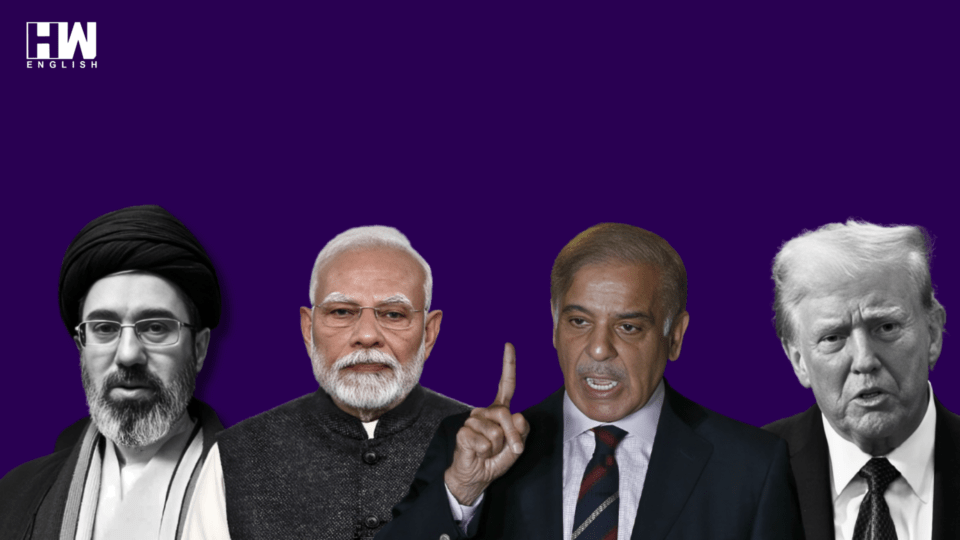
Let’s call this what it is, without diplomatic cushioning. When the United States chooses Pakistan and its Army Chief as a backchannel in a volatile West Asian conflict, it is not just a matter of convenience. It is a signal. And that signal is clear. India is not central to this conversation.
For a country that has spent the last decade projecting itself as a decisive global player, that should raise concern. The easy explanation is geography. Pakistan borders Iran. It offers proximity and a channel that Tehran may find more acceptable. On paper, it looks practical. But geopolitics is rarely about practicality alone. It is about utility, and how that utility is perceived.
So why did the United States choose Pakistan over India?
Because at this moment, Pakistan is seen as immediately usable. It offers access and a channel that can operate with fewer complications. That is the essence of transactional diplomacy. Countries are chosen not for who they are, but for what they can deliver right now.
But such choices are never neutral. By choosing Pakistan, the United States is also indicating who it sees as relevant and workable in this crisis. And by omission, who is not.
India, under Narendra Modi, was perceived to have leaned early. The visible engagement with Israel just days before military action, could have been routine diplomacy. What he said there was not. Timing matters. What was intended as continuity was read by many as alignment.
And perception defines role.
The moment you are seen as leaning too visibly toward one side, your ability to act as a bridge begins to shrink. Strategic autonomy does not disappear overnight, but it starts losing credibility. You are no longer viewed as a balancing force. You are seen as a participant. And participants are not invited to mediate.
That is where the real cost lies. Mediation is not about optics. It is about power. A credible intermediary shapes outcomes, builds trust across divides, and becomes indispensable. For India, that would mean influence in a region central to its energy and security interests, while reinforcing its position as a leading voice of the Global South.
Which leads to an uncomfortable question.
If India is not seen as neutral enough to mediate, and not influential enough to shape outcomes, then where exactly does it stand?
Have we, in trying to appear powerful, quietly given up the far more important power of being necessary?
As an independent media platform, we do not take advertisements from governments and corporate houses. It is you, our readers, who have supported us on our journey to do honest and unbiased journalism. Please contribute, so that we can continue to do the same in future.
