
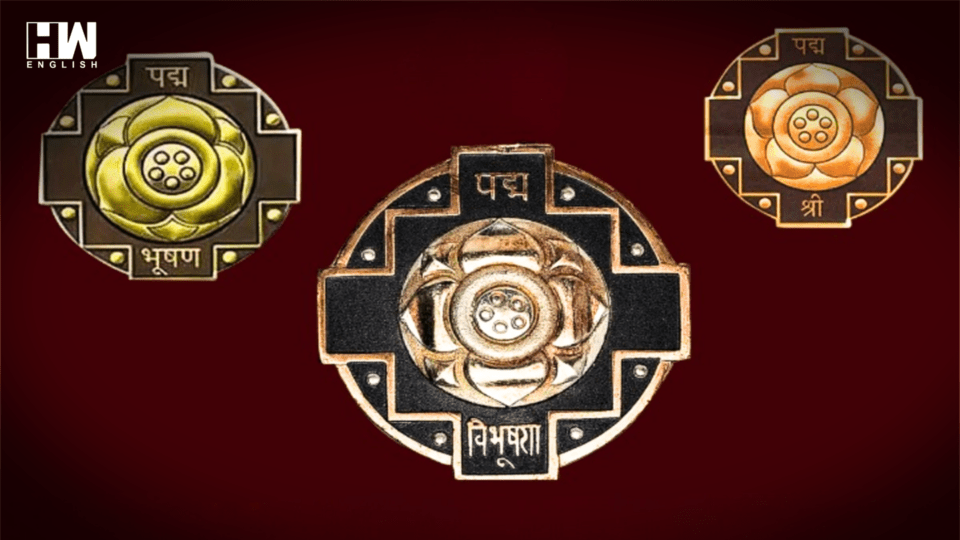
Every year, the Padma Awards are presented as a celebration of excellence. And every year, they also reveal something deeper about how power seeks legitimacy. The 2026 list is no different. In fact, it is a textbook example of what can be called the politics of recognition.
At first glance, the government appears to have made a genuine effort to look ideologically inclusive. Names associated with rival political traditions and even sharp critics of the current dispensation feature on the list. But a closer look suggests that this inclusivity is carefully curated and politically safe.
Take the so called opposition outreach. Yes, a towering Left leader like V S Achuthanandan is honoured. But it is posthumous. The symbolism is powerful, yet risk free. There is no possibility of refusal, no chance of a speech that challenges the state, no discomfort for the establishment. The honour allows the government to claim moral breadth while ensuring total narrative control. The same logic applies to figures like Shibu Soren, whose political legacy matters deeply in regions where the ruling party is trying to expand its footprint.
Then there is the growing emphasis on unsung heroes. Grassroots workers from tribal belts or remote regions are elevated as the new face of the Padma Awards. This is laudable. These individuals have often done remarkable work under difficult conditions. But politically, it serves another purpose. Their lives are usually outside ideological battles. They have no public record of dissent. No sharp criticism of policy. No inconvenient questions. By foregrounding them, the awards can be projected as people centric while quietly sidelining the outspoken intellectual and activist class that has traditionally questioned the state.
The third pattern is even more telling. The committee seems comfortable rewarding institutional figures and cultural icons. Actors with mass appeal. Former governors. Establishment insiders. Even when such names are controversial, the defence is easy. They are presented as contributions to culture or public service, not politics. Yet those who actively protest, campaign, or challenge government policies are entirely absent. You will not find a civil rights activist, a combative journalist, or a contemporary dissenter on the list.
This leads to the most striking omission. The active critic. The living, breathing voice of opposition that still shapes public debate. By honouring rivals of the past and ignoring challengers of the present, the list becomes a safe space. Even its diversity is carefully managed. It offends no one who actually matters in today’s political contest.
So the controversy of 2026 is not really about individual names. It is about intent.
From one angle, supporters argue that merit has finally triumphed over ideology. From another, critics see tactical honours designed to woo specific communities and regions while keeping genuine dissent firmly outside the frame. And from a third perspective, the awards appear to operate as a closed loop, rewarding those who are silent, symbolic, or institutionally aligned.
Which brings us to the real question. Does this kind of posthumous outreach and selective inclusivity actually strengthen the credibility of the Padma Awards, or does it make them feel increasingly hollow to a public that can clearly see the difference between honouring legacy and engaging with living dissent?
Dear Readers,
As an independent media platform, we do not take advertisements from governments and corporate houses. It is you, our readers, who have supported us on our journey to do honest and unbiased journalism. Please contribute, so that we can continue to do the same in future.
As an independent media platform, we do not take advertisements from governments and corporate houses. It is you, our readers, who have supported us on our journey to do honest and unbiased journalism. Please contribute, so that we can continue to do the same in future.
