
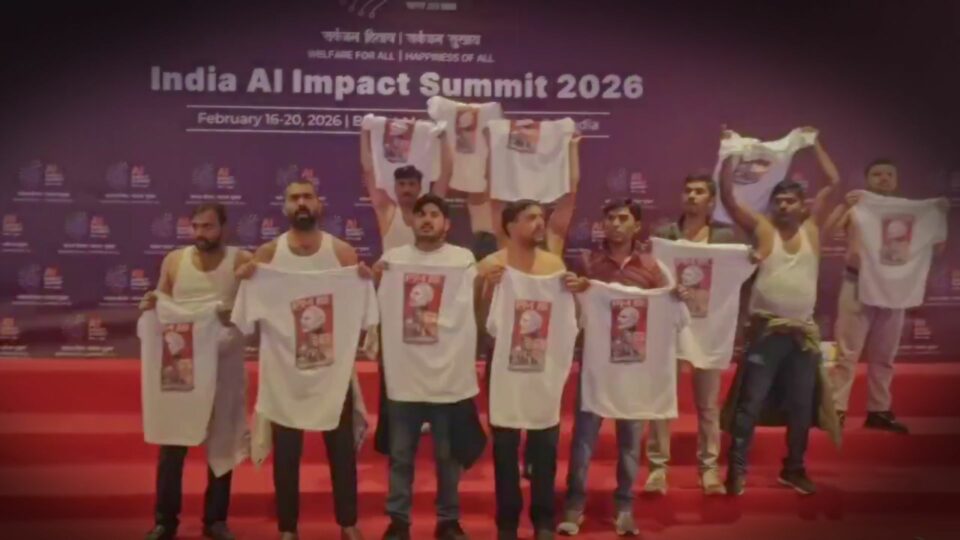
Protest is important in a democracy. It allows people to express anger, frustration, and disagreement. Without protest, governments stop listening. So the right to protest must always be defended.
But how you protest matters as much as why you protest.
The Youth Congress members were protesting unemployment and what they see as a lack of transparency in recruitment. Those are serious issues. Many young people are worried about jobs. That concern is real. It deserves attention.
Their decision to go shirtless was meant to send a message. They were trying to say they have been stripped of dignity and opportunity. From their point of view, it was symbolic.
They chose the AI Impact event because it was high profile. The government was showcasing a modern, technology driven vision of India. The protesters wanted to contrast that image with what they call the ground reality of joblessness. They believed that disrupting such an event would guarantee coverage. A routine march or memorandum may not have received the same attention.
But here is where the debate begins.
In politics, there is always a thin line between effective dissent and performative optics. If the form of protest becomes more shocking than the issue itself, people focus on the spectacle instead of the substance.
Many people did not end up discussing unemployment. They discussed the shirtless protest. That tells you something. When the method distracts from the message, the message weakens.
There is also the question of international optics. An event like AI Impact is meant to signal that India is ready for investment and innovation. The government naturally sees such disruptions as damaging the country’s image. Some citizens agree with that view. They feel domestic disagreements should not overshadow international platforms.
Others would argue that real strength comes from allowing dissent openly, even in uncomfortable settings. They would say that hiding internal problems for the sake of image does not solve them.
Another question is who the protest was really aimed at. Was it meant to persuade the broader public? Or was it meant to energise the party’s own base and signal activism to leadership? In modern politics, high visibility stunts often serve internal messaging as much as public persuasion.
In the end, a protest can be judged by one simple test. Did it shift public opinion toward the cause? If most people are talking about the style instead of the substance, then the strategy probably did not work as intended.
Unemployment is a serious subject. It needs serious discussion and credible solutions. When tactics overshadow the issue, the opportunity to build wider support gets lost.
Dissent is essential in any democracy. But whether it works or not depends on good judgment, the right timing, and an understanding of how people are feeling. That balance is one of the biggest challenges in political communication today.
As an independent media platform, we do not take advertisements from governments and corporate houses. It is you, our readers, who have supported us on our journey to do honest and unbiased journalism. Please contribute, so that we can continue to do the same in future.
