
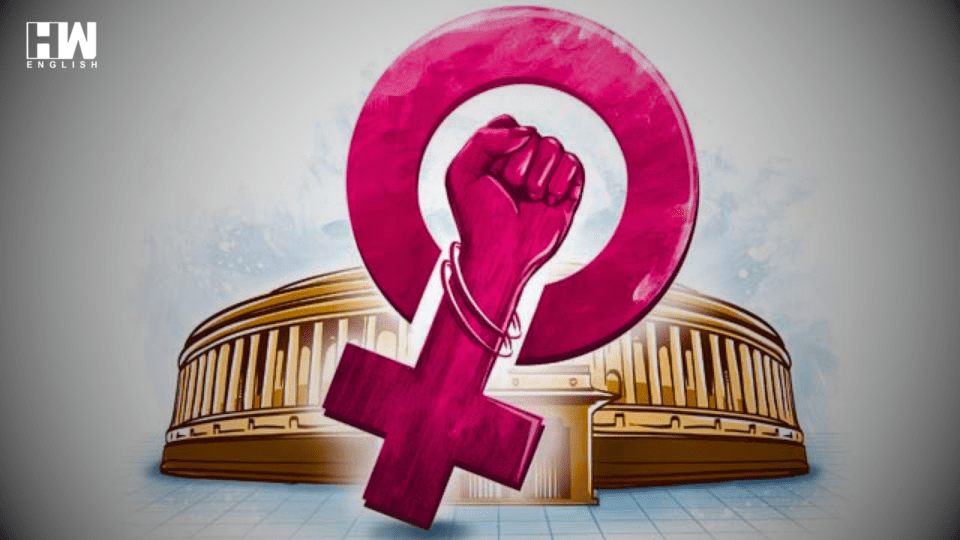
The continued delay in implementing the Women’s Reservation Bill, by linking it to the proposed Delimitation Bill of 2026, raises a simple question. If something is right on its own merit, why must it wait for something else?
When Policy Becomes Strategy
The Women’s Reservation Bill is straightforward in intent. It seeks fair representation for half the population. Its logic stands on its own. By tying it to delimitation, the issue shifts from whether it is needed to when it is politically convenient.
That shift matters.
Because once governance starts waiting for the “right political moment,” decisions stop being about necessity and start being about advantage.
The Larger Problem
This pattern is visible beyond one bill.
In the economy, growth is often presented through numbers and rankings. But if the Common Indian does not feel greater stability or purchasing power, those numbers remain distant from reality. Growth that does not reach people is only perception.
In lawmaking, reforms are sometimes shaped by optics. When that happens, laws lose clarity and purpose. They exist, but they do not fully solve the problem they were meant to address.
Over time, this creates a gap between what is announced and what is experienced.
What Should Change
Some decisions should stand independently. Representation is one of them. It cannot be conditional. A government’s role is not to wait for alignment with political strategy. It is to act when the case is clear.
National interest is not about choosing the right time. It is about choosing the right thing.
If necessary reforms continue to depend on political timing, they will keep getting postponed, diluted, or redirected. And that brings us to a basic question.
Are we making decisions because they are needed, or because they fit the moment?
As an independent media platform, we do not take advertisements from governments and corporate houses. It is you, our readers, who have supported us on our journey to do honest and unbiased journalism. Please contribute, so that we can continue to do the same in future.
