
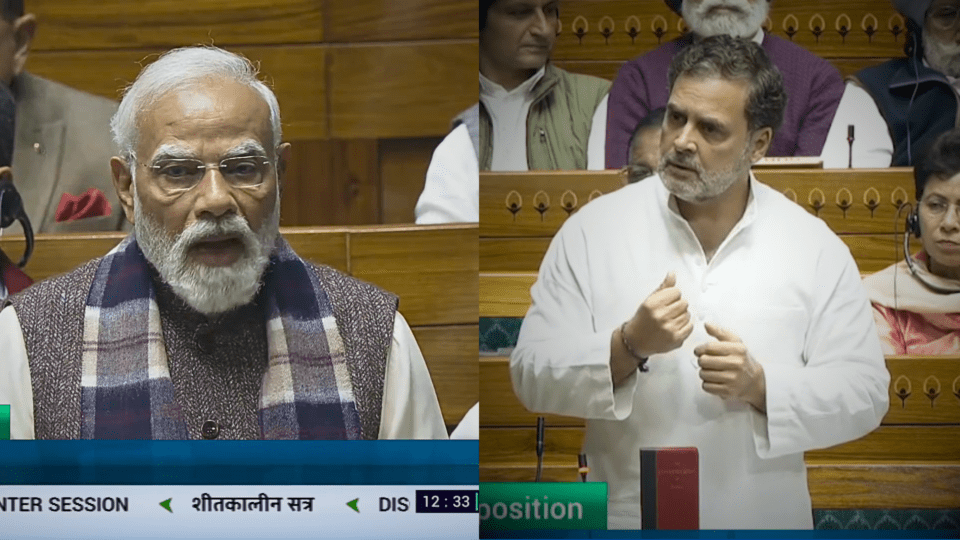
In India, the Government has two clear constitutional spaces to explain decisions, policies and actions. The first is Parliament. The Lok Sabha and the Rajya Sabha exist so that citizens can question power through their elected representatives. Members of Parliament raise issues not as a ritual, but as a responsibility to the people they represent. The government and its ministers are duty bound to respond. Yet, over time, participation has become selective. What was particularly troubling was the sight of an empty treasury bench in the Rajya Sabha, with not a single cabinet minister present for debate. More often than not, the Prime Minister schedules his foreign visits during Parliament sessions. And this time is no exception either. One is left to ask whether this reflects the value he places on democratic accountability and the role of the Parliament. When accountability is treated as optional at the top, it weakens the institution itself.
The second space is the press conference. Journalists do not ask questions for personal gratification. They ask on behalf of citizens who deserve clarity. Yet, Prime Minister Narendra Modi has consistently chosen silence over engagement. Dialogue has been replaced by monologue. Carefully scripted addresses have taken the place of unscripted questions. A nation has slowly been conditioned to listen, not to ask.
Let me also inform my readers that this concern is not limited to the Prime Minister alone. I am equally appalled by the fact that the Leader of the Opposition, Rahul Gandhi, is travelling to Germany from the 15th to the 19th of December, right in the middle of Parliament’s winter session. This is unfortunate and indefensible. Parliamentary responsibility cannot be treated as optional. One must first work, participate and deliver for Indians at home before attempting to represent ideas or causes abroad in the name of being a global citizen. The Leader of the Opposition must remember that losing elections is a part of democracy, but weakening or undermining Parliament goes against its very spirit.
In a democracy, the decision maker must justify his decisions. That is the burden and responsibility that comes with power. When leaders repeatedly avoid questions, only two conclusions remain. Either he sees himself above scrutiny, a ruler rather than a representative. Or he fears the questions of his own people.
Democracy does not survive on elections alone. It survives on answers.
Dear Readers,
As an independent media platform, we do not take advertisements from governments and corporate houses. It is you, our readers, who have supported us on our journey to do honest and unbiased journalism. Please contribute, so that we can continue to do the same in future.
As an independent media platform, we do not take advertisements from governments and corporate houses. It is you, our readers, who have supported us on our journey to do honest and unbiased journalism. Please contribute, so that we can continue to do the same in future.
