
Let’s go step by step.
In a country like India, where the judicial system is already stretched thin, it is neither practical nor sustainable to allow every accused person to seek recusal of a judge simply on the basis of discomfort or suspicion. If such a precedent were encouraged, the system would quickly become unworkable. Cases would stall endlessly, judicial time would be misused, and the delivery of justice would suffer. On that principle alone, the judiciary is right in holding that recusal cannot be granted merely on perception.
However, that is only one part of the picture. The deeper question is what happens if that perception is not entirely baseless, if an accused genuinely feels there could be bias, whether ideological, institutional, or circumstantial. Even if such a plea does not meet the legal threshold for recusal, should there not exist a structured and transparent mechanism to acknowledge and address that apprehension? Justice is not merely about the final verdict. It is also about the confidence it inspires in those subject to it. If a litigant enters a courtroom already convinced that the process may not be neutral, then even a fair judgment risks being seen as compromised. Addressing that perception, therefore, is not a concession, but a necessity for sustaining trust in the system.
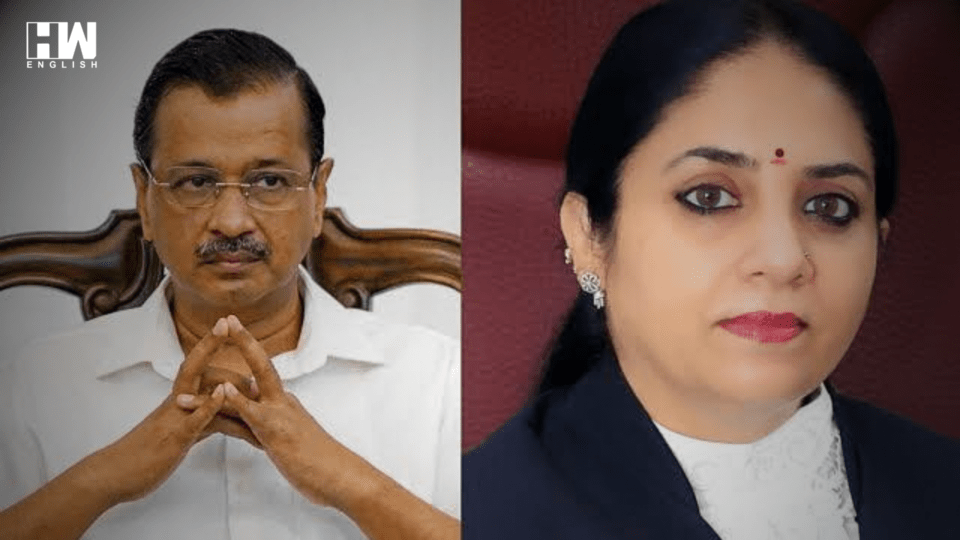
This brings us to the recent case involving Arvind Kejriwal. On April 20, 2026, Justice Swarana Kanta Sharma of the Delhi High Court rejected the recusal plea. The reasoning was clear and firmly grounded in law. The court held that allegations must be supported by concrete material, not merely by doubts or insinuations. It further clarified that the professional roles of the judge’s family members as government counsel do not automatically establish bias, and that participation in professional events cannot be construed as ideological alignment. Importantly, the judgment also cautioned that permitting such pleas without substantive basis would risk placing the judiciary itself on trial, potentially opening the door to pressure tactics by influential litigants. From a strictly legal standpoint, the order is reasoned and defensible.
Yet, this is where the issue moves beyond legality into the realm of public trust. Shortly after these proceedings, several digital platforms received notices linked to directions involving the Delhi Police to take down the video of the courtroom exchange where the recusal was argued. As responsible platforms, compliance followed. The law was adhered to. But compliance does not answer the underlying question. Why should citizens be prevented from seeing what transpired in an open court?
If there are legal or procedural reasons for restricting such content, they should be clearly communicated. Courts may act to prevent prejudice, protect due process, or maintain the integrity of proceedings. But in the absence of transparent reasoning, such actions risk creating a perception of opacity.
In a democracy, transparency is not optional. It is foundational. Politicians are expected to be accountable, governments are scrutinized, the media is constantly questioned, and even private citizens are not beyond public examination in certain contexts. In such an environment, can the judiciary afford even the perception of opacity? Judges are entrusted with immense responsibility. They interpret the law, safeguard rights, and shape constitutional outcomes. But they remain public functionaries performing a duty on behalf of society. And that duty draws its strength from public confidence.
When proceedings are restricted, when information is withdrawn from the public domain without adequate explanation, and when visibility is reduced, it inevitably creates a vacuum. And in that vacuum, suspicion grows. Not because people are inclined to distrust, but because the system appears unwilling to be fully seen.
This, therefore, is not about questioning a particular judge or a specific ruling. It is about a broader institutional concern. The judiciary’s authority ultimately rests not just on the correctness of its judgments, but on the credibility of its processes.
And that leads to the fundamental question we must ask:
In a democracy, can justice truly remain credible if it is not fully visible?
As an independent media platform, we do not take advertisements from governments and corporate houses. It is you, our readers, who have supported us on our journey to do honest and unbiased journalism. Please contribute, so that we can continue to do the same in future.
