
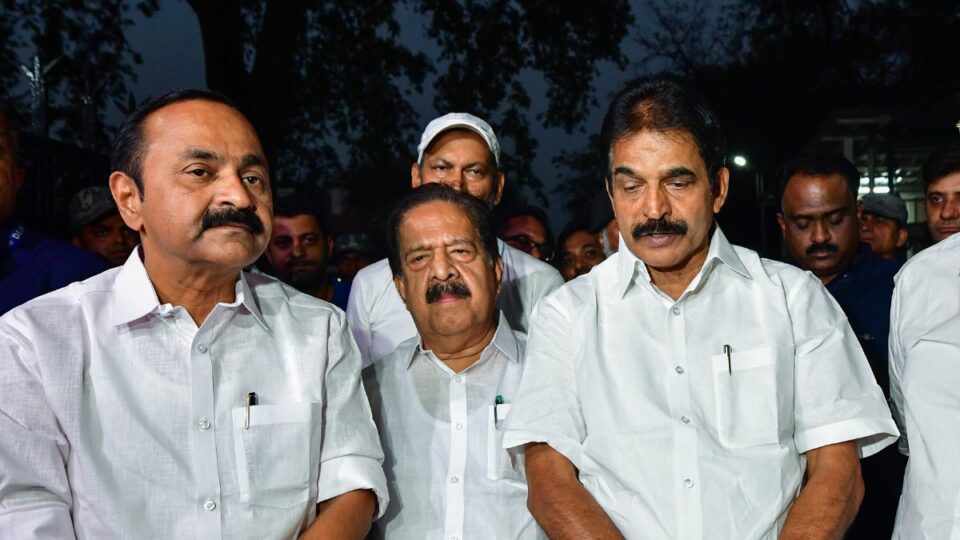
Congress took 10 days to decide on their Chief Minister in Kerala. But is that really a political crisis, or have we simply become too used to instant, centralised decision making
Democracy works through consultation and consensus. And genuine consensus takes time
More importantly, the Congress in Kerala was not choosing between weak or placeholder candidates. It had three politically credible leaders to choose from.
One, V.D. Satheesan. A hardcore grassroots leader with tremendous support among party workers and middle level leaders. Someone who also enjoys the confidence of alliance partners like the IUML.
Two, K.C. Venugopal. An organisational man, nationally relevant, and close to the central leadership.
Three, Ramesh Chennithala. A senior politician, seasoned administrator, and long standing party loyalist.
Now honestly ask this question. Which other major political party in recent state elections had such a serious leadership bench to choose from after victory?
The larger point is this.
For years, Indian politics has increasingly moved towards centralised leadership models where decisions are taken quickly by a small group at the top and communicated downward. That may look efficient. But efficiency alone is not democracy.
What happened in Kerala after the UDF victory was democracy in action. Freedom to choose, because party workers, supporters, and alliance leaders openly expressed support for their preferred Chief Ministerial candidate. There was visible lobbying, debate, pressure, and negotiation in the public domain.
I see sections of the mainstream media criticising this. I genuinely wonder why.
Isn’t this what internal democracy is supposed to look like? Or have we become so used to “high command culture” in political parties that any visible internal debate now appears abnormal?
Of course, political parties eventually need clarity and decisiveness after receiving a mandate. But suppressing independent voices and choices in the name of discipline cannot become the definition of democracy.
Political parties are not meant to function like corporate structures where everybody waits silently for instructions from the top.
Internal debate may sometimes look messy. It may even look chaotic.
But a system where nobody is allowed to disagree or openly support a leadership choice may look disciplined from the outside, while becoming deeply centralised from within.
As an independent media platform, we do not take advertisements from governments and corporate houses. It is you, our readers, who have supported us on our journey to do honest and unbiased journalism. Please contribute, so that we can continue to do the same in future.
