
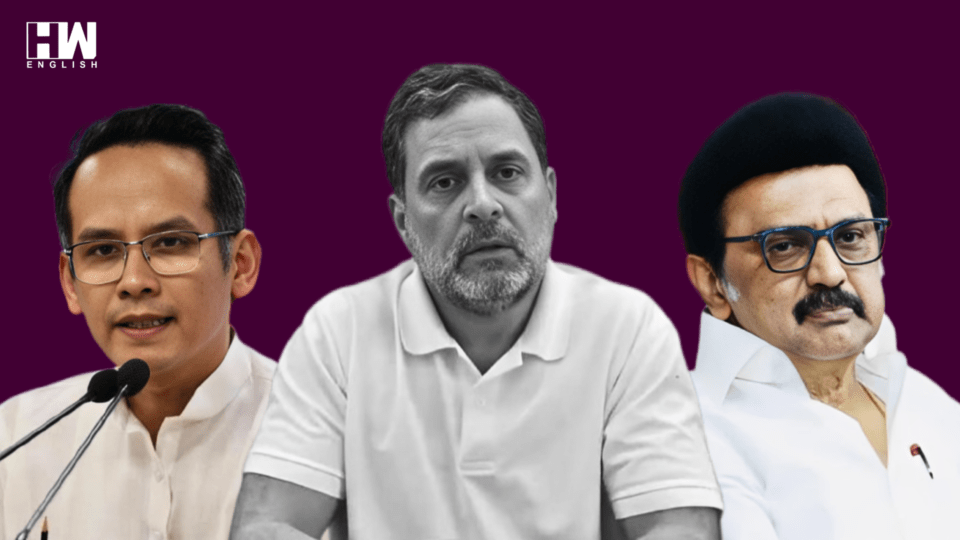
The 2024 Lok Sabha elections marked a modest resurgence for the Indian National Congress, securing 99 seats and contributing to the INDIA bloc’s efforts to challenge the Bharatiya Janata Party’s dominance. This performance nearly doubled the party’s tally from 2019, reflecting a vote share rise to 21.2 percent, though it remained historically low compared to its peak eras. The BJP, with 240 seats, formed a coalition government reliant on allies like the Telugu Desam Party and Janata Dal (United), signaling a shift from outright majorities. However, the Congress’s national gains have not translated smoothly into state-level successes. In subsequent assembly elections, the party faced setbacks in key battlegrounds. In Haryana, despite high expectations, the Congress won only 37 seats against the BJP’s 48, amid allegations of irregularities that led to blame directed at the Election Commission.
Maharashtra proved even more disappointing, with the Maha Vikas Aghadi alliance, including Congress, securing just 46 seats for the party while the BJP-led Mahayuti claimed 230. These losses highlighted organizational weaknesses and an inability to capitalize on anti-incumbency sentiments. Even in victories like Jharkhand, where the Congress-JMM alliance retained power with Congress winning 16 seats, the party’s role was secondary, underscoring reliance on regional partners.

As 2026 approaches, assembly elections in West Bengal, Kerala, Tamil Nadu, and Assam loom as critical tests. In West Bengal, the Congress’s decision to contest independently, amid a fractured organization and minimal vote share in recent polls (less than 3 percent in 2021), dims prospects against the Trinamool Congress and BJP. Kerala offers brighter hopes, with the United Democratic Front potentially reclaiming power from the Left Democratic Front, leveraging anti-incumbency.
Yet, the real intrigue lies in Tamil Nadu and Assam, where alliance dynamics and internal challenges could define the Congress’s trajectory in southern and northeastern politics. These states encapsulate the party’s broader struggle: balancing coalitions for survival while addressing deep-seated organizational flaws.
The Imperative of DMK Alliance Stability in Tamil Nadu
In Tamil Nadu, the Congress’s fortunes are inextricably linked to its alliance with the Dravida Munnetra Kazhagam, a partnership that has yielded consistent electoral dividends. The Secular Progressive Alliance, led by the DMK, swept the 2021 assembly elections with 159 seats, including 18 for Congress, and replicated success in the 2024 Lok Sabha polls by winning all 39 seats in the state. This synergy has delivered high strike rates for Congress candidates, often exceeding 80 percent in contested constituencies, far surpassing the party’s independent vote share, which historically hovers below 5 percent without allies. Breaking this tie would be disastrous, exposing Congress to marginalization in a Dravidian-dominated landscape where the All India Anna Dravida Munnetra Kazhagam and BJP-led National Democratic Alliance could capitalize on fragmented opposition votes.

Recent developments, such as the Desiya Murpokku Dravida Kazhagam’s entry into the DMK fold, further strengthen the alliance, potentially securing a Rajya Sabha seat and bolstering outreach in key regions. For Congress, going solo risks ceding ground, as evidenced by past experiments where isolated campaigns yielded negligible gains. The DMK’s welfare-focused “Dravidian Model” resonates with voters, and Congress benefits from this umbrella, particularly among minority and rural demographics. Any split could invite BJP-AIADMK incursions, diluting anti-BJP sentiments and weakening the INDIA bloc’s southern bastion. Thus, maintaining this alliance is not optional but essential for Congress’s relevance in Tamil Nadu.

Escalating Infighting and Leadership Defections in Assam Congress
Assam’s Congress unit is plagued by rising internal discord, manifesting in resignations, factional rivalries, and stalled alliance negotiations, all of which erode cadre morale as elections near. The recent resignation of former state president Bhupen Kumar Borah, who held the post from 2021 to 2024, exemplifies this turmoil. Borah, a key architect of alliances, cited frustrations with the high command’s indecision and withdrew his candidacy, only to confirm his shift to the BJP on February 22, 2026. This defection, following meetings with Union Home Minister Amit Shah, signals a broader exodus; Borah claimed up to 50 percent of “self-respecting” Congress members might follow, viewing the party as out of touch with Assamese nationalism.

Such moves echo historical patterns, like Himanta Biswa Sarma’s 2015 switch to BJP after clashing with Tarun Gogoi, which bolstered the BJP’s rise to power in 2016. Current president Gaurav Gogoi’s announcement to contest 100 of 126 seats has strained ties with allies like Raijor Dal, which demands 15 seats but receives offers deemed unfair, leading to public criticisms and threats of independent runs. Delays in seat-sharing, compounded by cultural debates framing Congress as “Sankar-Azan” versus BJP’s “Sankar-Madhav,” further alienate voters. This infighting diminishes organizational strength, with weak grassroots coordination and low confidence among workers, potentially handing advantages to the BJP’s cohesive machinery.

Contrasting Fortunes: Stability in Tamil Nadu Versus Vulnerability in Assam
Beyond alliances, Congress’s position in Tamil Nadu remains robust due to enduring DMK ties and electoral momentum, starkly contrasting Assam’s fragility under BJP dominance. In Tamil Nadu, the partnership has facilitated recent triumphs, including a clean sweep in 2024 Lok Sabha seats and a projected 200-plus assembly wins in 2026, with Congress eyeing 28-30 constituencies amid negotiations. This stability stems from ideological alignment against BJP’s expansion and effective minority vote consolidation, despite internal Congress pushes for power-sharing.
Assam, however, grapples with internal rifts that amplify vulnerabilities; the party’s 29 seats from 2021 are at risk amid defections and alliance fractures, with surveys indicating slim chances against the BJP’s incumbency. The Muslim voter base, historically a Congress stronghold comprising about 35 percent of the electorate, is fragmenting due to perceived communal shifts and exclusions, like ruling out ties with the All India United Democratic Front.
While Tamil Nadu’s setup allows Congress to leverage DMK’s dominance, Assam’s disarray highlights a failure to rebuild post-2016 losses, making it susceptible to BJP’s narrative of development and stability. This disparity underscores the need for tailored strategies: consolidation in the south and urgent reforms in the northeast.
2026 Elections as a Litmus Test for Congress Revival
The 2026 assembly polls in Tamil Nadu and Assam will gauge Congress’s post-2024 momentum, with outcomes potentially invigorating national aspirations or exposing persistent regional frailties. Success in Tamil Nadu could propel the party forward, reinforcing the INDIA bloc and providing a model for alliances elsewhere, boosting morale after Maharashtra and Haryana setbacks. A strong showing, aided by DMK’s incumbency and slim-margin constituencies (66 decided by under 5 percent in 2021), might yield 30-plus seats, enhancing leverage in national politics.
Conversely, Assam’s results could spotlight northeastern challenges; unchecked infighting risks seat erosion, signaling organizational decay and diminishing the party’s Muslim base against BJP’s targeted campaigns. These elections transcend local wins, testing Congress’s ability to navigate coalitions amid BJP’s expansion. Positive Tamil Nadu results might offset Assam’s hurdles, fostering revival; failures could stall progress, emphasizing the urgency of unified leadership and grassroots rebuilding.
(Sayantan Ghosh is the author of The Aam Aadmi Party: The Untold Story of a Political Uprising and Its Undoing. He is on X as @sayantan_gh.)
As an independent media platform, we do not take advertisements from governments and corporate houses. It is you, our readers, who have supported us on our journey to do honest and unbiased journalism. Please contribute, so that we can continue to do the same in future.
