
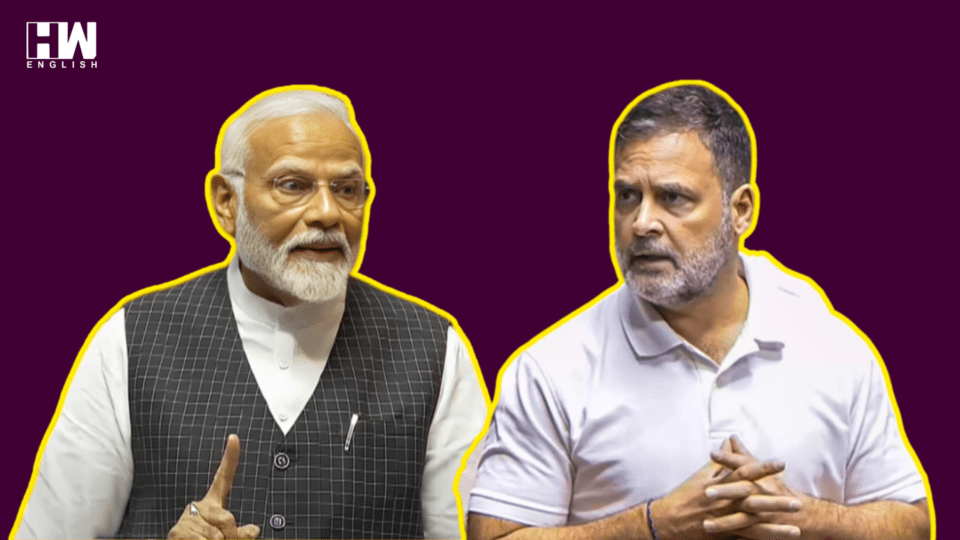
If India had a presidential style election today, who would win?
I honestly do not know. But I do know that the political equation has changed dramatically.
Look at Rahul Gandhi’s journey from 2016 to 2026.
The transformation has been extraordinary. His popularity, credibility and connect with younger India have grown substantially. More importantly, he has not merely tried to repair his image. He has tried to reinvent himself and the way politics is presented.
Take “Chhatron Ki Goonj”.
It does not resemble a traditional political rally. Students, conversation, music, humour, interaction and spontaneity come together in a format that feels closer to a youth cultural event.
That is a new political experience.
Rahul is experimenting with formats, communication and the way a political leader connects with young people. He is trying to make politics participatory, informal and culturally relevant to a new generation.
Modi comes from a completely different position.
He reached the peak of political popularity in 2014, consolidated it in 2019 and, despite eleven years in power, remains an extraordinarily powerful political brand.
That itself is remarkable.
But Modi’s political strategy today is largely about consolidation. The Modi brand is reinforced through his own platforms, carefully controlled messaging and a vast ecosystem of ministers, MPs, celebrities and supporters constantly amplifying his achievements and authority.
Even when he reaches out to young India, as he did recently at Shri Ram College of Commerce, the basic political architecture remains recognisably Modi. The language may change. The platform may change. But the established brand remains at the centre.
That model has worked brilliantly.
The question is whether it will work with the same intensity with the India of 2029.
And this is where the two trajectories become interesting.
Rahul Gandhi is reinventing.
Narendra Modi is consolidating.
Rahul is trying to create something new.
Modi is trying to keep an extraordinarily successful political brand relevant.
The voters of 2029 will include a much larger generation of young Indians who have grown up with completely different media, culture and expectations.
So perhaps the real contest in 2029 will not simply be Rahul Gandhi versus Narendra Modi.
It could be innovation versus tradition.
A new political experience versus an established political brand.
And ultimately, the answer to who India chooses may depend on one simple question:
What will the younger India of 2029 prefer?
Innovation or tradition?
That may be the real Rahul Gandhi versus Narendra Modi contest
As an independent media platform, we do not take advertisements from governments and corporate houses. It is you, our readers, who have supported us on our journey to do honest and unbiased journalism. Please contribute, so that we can continue to do the same in future.
