
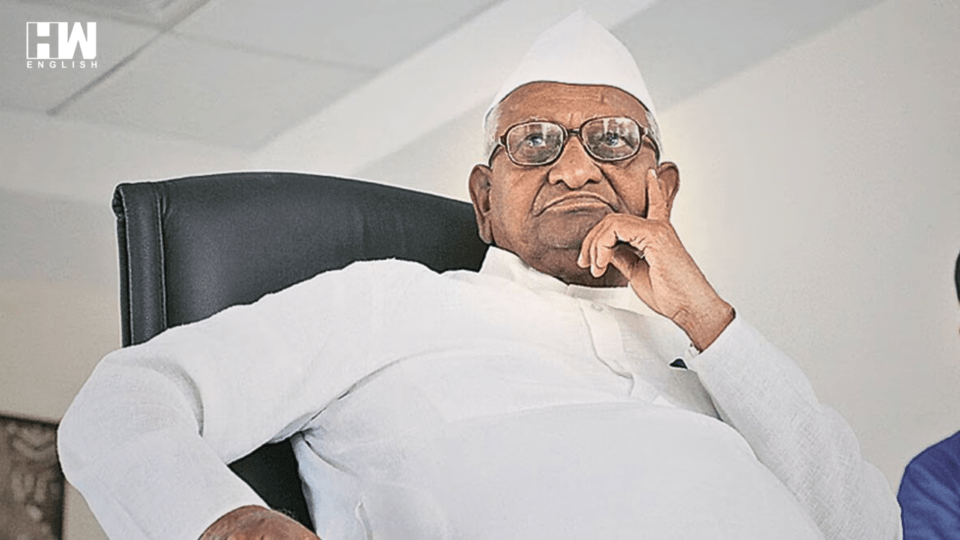
Many years ago, during an interaction with Anna Hazare, he told me something that has stayed with me ever since. He said politics is perhaps the worst job anyone can choose. A thankless profession, where the first thing that is tested and often taken away is your self respect. Ego, pride, identity, all of it becomes a vulnerability, and sooner or later, it is used against you.
I have not agreed with much of his politics. But on this, I have found myself agreeing more and more over time.
Based on my own experience, here are ten characteristics of politicians that stand out.
First, politics demands a shedding of self. The system does not reward personal pride. It rewards those who can absorb humiliation, adapt, and continue without visible reaction.
Second, politicians often project the exact opposite of what they are. The corrupt appear clean. The fearful sound brave. The unsure come across as decisive. Image is not just important, it is carefully constructed.
Third, authenticity has its limits in politics. Those who remain completely themselves may rise, may even become leaders or ministers, but rarely do they become what the system defines as consistently successful.
Fourth, what we often celebrate as masterstrokes are, in reality, decisions taken under pressure and circumstance. When they work, they are called master stroke and strategy. When they fail, they are forgotten. Luck plays a far bigger role than we acknowledge.
Fifth, it is one of the most stressful and insecure professions. There is constant scrutiny, shifting equations, and almost no emotional margin for error.
Sixth, not all politicians are immoral or criminal. But many operate with selective integrity. Principles exist, but they are often shaped by context and consequence.
Seventh, most successful politicians are naturally intelligent. Not always academically, but instinctively. They read people, timing and power equations with sharp clarity.
Eighth, is a dichotomy of sorts, while politics attacks ego and pride often, yet, a significant number of politicians, display strong narcissistic traits. A certain level of self belief, sometimes bordering on self obsession, seems necessary to sustain power.
Ninth, the relationship between power and money is deeply intertwined. For some, power leads to money. For others, money leads to power. For many, both exist in a continuous cycle.
Tenth, politicians take time to trust. Every relationship is evaluated, every alliance weighed. Trust is slow, cautious, and rarely unconditional.
The more one observes politics closely, the clearer it becomes that this is not a normal profession. It is a constant negotiation between survival and identity, perception and reality, power and consequence.
And perhaps that is the real dilemma.
If the system itself rewards those who can bend, adapt and reinvent, then are we expecting integrity from individuals, or from a structure that was never designed to sustain it?
As an independent media platform, we do not take advertisements from governments and corporate houses. It is you, our readers, who have supported us on our journey to do honest and unbiased journalism. Please contribute, so that we can continue to do the same in future.
