
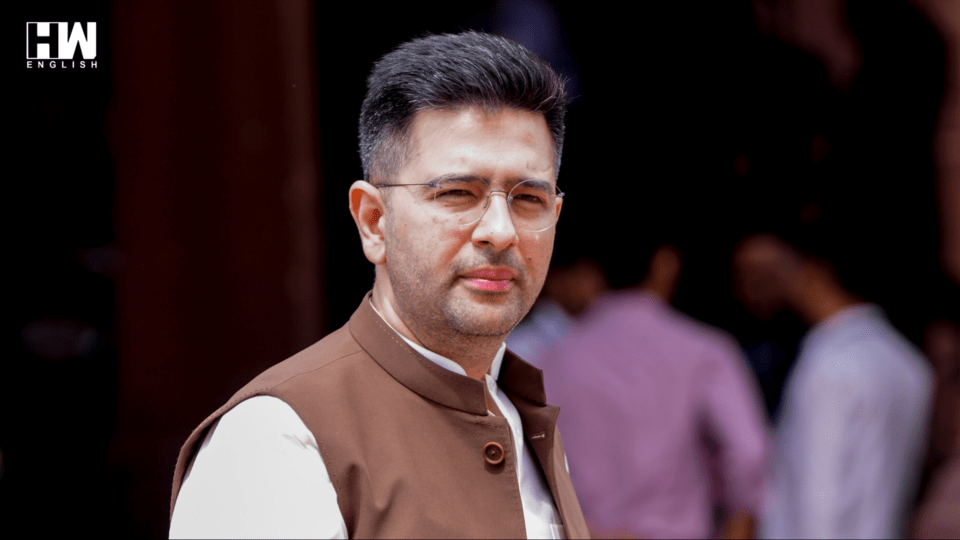
On April 24, 2026, Raghav Chadha led a group of Rajya Sabha MPs from the Aam Aadmi Party into the Bharatiya Janata Party. The explanation offered was familiar. AAP has lost its way. The leadership no longer serves the people. Conscience demanded a course correction.
It sounds principled. It often does.
But when a leader spends years building his identity around opposing a political establishment, and then joins that very establishment in one decisive move, the question becomes inevitable. What changed overnight… the ideology, or the circumstances?
This was not an impulsive decision. It was structured, precise, and legally secure. By bringing seven out of ten Rajya Sabha MPs, the group crossed the two thirds threshold under the Tenth Schedule, making the transition compliant with the anti defection framework. This was not rebellion. This was strategy executed within the rules.
The shift included senior organisational and public faces such as Raghav Chadha, Sandeep Pathak, Ashok Mittal, Harbhajan Singh, Swati Maliwal, Vikramjit Sahney, and Rajinder Gupta. In contrast, only Sanjay Singh, Narain Dass Gupta, and Sanjeev Arora remain as the core presence of AAP in the Rajya Sabha.
But to understand this moment honestly, we have to step back from AAP.
Because this is not an isolated story.
Over the years, leaders from the Congress, the TMC, and several other parties have also made similar transitions into the BJP. Often with the same language. Often with the same timing. Often under comparable circumstances.
Which tells us something deeper.
This is not about one party losing its ideological anchor. This is about a political ecosystem where ideology itself is becoming flexible, negotiable, and at times, secondary.
Look at the pattern closely.
External pressure.
Internal friction.
A visible shift in tone.
And then, a seamless political realignment.
The sequence is no longer surprising.
For AAP, this is a sharp and immediate setback. For other parties, it echoes a pattern they have already experienced. But for the voter, it raises a far more serious concern.
If leaders can move across political lines with such ease, while still claiming moral high ground, then what exactly are we voting for?
A belief system… or a moment in a larger negotiation of power?
As an independent media platform, we do not take advertisements from governments and corporate houses. It is you, our readers, who have supported us on our journey to do honest and unbiased journalism. Please contribute, so that we can continue to do the same in future.
