
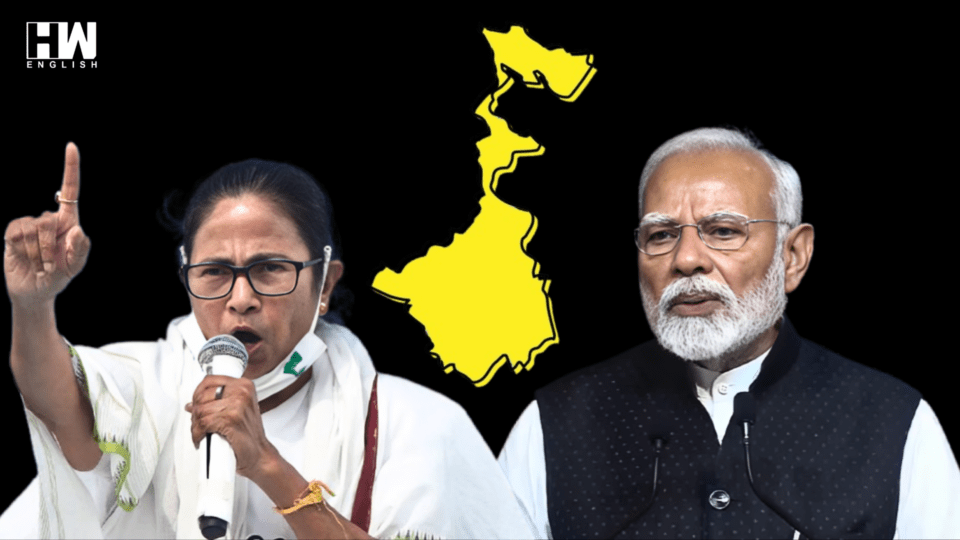
The publication of the final Special Intensive Revision (SIR) electoral roll in West Bengal marks a pivotal moment in the state’s turbulent political history. Scheduled for release on February 10, 2026, this list emerges from an intensive voter verification process initiated by the Election Commission in late 2025, amid widespread controversy. Designed to cleanse the rolls of duplicates, deceased, shifted, or absent voters, the SIR has deleted over 58 lakh names from the draft—representing about 7.6% of the 7.66 crore electors in 2025. This exercise, the first of its kind in over two decades, has ignited fears of disenfranchisement, particularly among marginalized communities, echoing the anxieties surrounding the National Register of Citizens (NRC) in Assam.
In a state where identity, migration, and citizenship have long fueled electoral battles, the SIR process has deepened communal divides. Trinamool Congress (TMC), led by Chief Minister Mamata Banerjee, has vehemently opposed it, labeling it a “backdoor NRC” orchestrated by the Bharatiya Janata Party (BJP) to target minorities and erode Bengali identity. Banerjee has warned of up to 1.2 crore potential deletions, vowing to protect genuine voters through legal and grassroots resistance. The BJP, conversely, champions the revision as essential for removing “illegal infiltrators,” primarily from Bangladesh, to ensure fair polls. Yet, early data reveals a more nuanced impact: higher exclusions among non-Muslims in certain belts, challenging the narrative of targeted Muslim removals.
Tragic incidents underscore the human cost—at least 11 suicides linked to SIR-related panic by November 2025, cutting across communities. As West Bengal gears up for the 2026 assembly elections, the final SIR list could alter voter turnout, consolidate polarised bases, and tip the balance between TMC’s incumbency advantage and BJP’s expansionist ambitions. With a history of migration shaping demographics—Muslims comprising over 30% of the population, and Scheduled Caste groups like Matuas and Rajbanshis holding sway in key districts—the roll’s implications extend beyond numbers to the very fabric of democratic participation. Border districts show sharp voter spikes since 2002, while urban areas like Kolkata lag, highlighting uneven growth that parties will exploit. This revision, amid ongoing Citizenship Amendment Act (CAA) debates, tests the resilience of secular politics in a state where elections often hinge on identity rather than governance.
Recalibrating Voter Totals: SIR’s Impact on Overall Electorate Size
The final SIR list will fundamentally determine West Bengal’s total voter count for the 2026 elections, potentially shrinking the electorate and reshaping turnout dynamics. From the 7.66 crore voters in 2025, the draft already excised 58.2 lakh names—primarily for being absent, shifted, deceased, or duplicates—retaining 92.4% but signaling a purge that could exceed initial estimates if claims and objections push deletions higher. This net reduction, if finalized, would mark the most significant electoral cleanup since 2002, when voter numbers stood at 4.5 crore, reflecting a 69% growth over 23 years now tempered by rigorous verification.
It looks like that final tally could hover around 7 crore, factoring in new additions (around 20 lakh young voters) offset by further removals during hearings from December 18, 2025. This contraction matters deeply in a state with 294 assembly seats, where margins are razor-thin—BJP won 77 in 2021, TMC 213. A smaller electorate amplifies the weight of remaining voters, potentially boosting urban turnout while depressing it in rural, migration-prone areas. Border districts like North and South 24 Parganas, with 83% and 72% voter growth since 2002, face scrutiny for “unnatural spikes,” attributed by BJP to infiltration but contested by data showing organic demographic shifts.
Politically, this recalibration favors parties with strong organizational machinery. TMC’s door-to-door campaigns to assist voters with documentation could mitigate losses, while BJP’s push for “pure rolls” risks alienating fence-sitters if perceived as overreach. Historical parallels with Assam’s NRC, where 19 lakh exclusions (mostly non-Muslims) disrupted polls, suggest similar chaos: lower participation from fearful groups, legal battles delaying results, and a polarized campaign narrative.
In 2026, a leaner voter base might entrench incumbency, as TMC leverages state resources for inclusion drives, but it also opens avenues for BJP to claim credit for transparency if deletions align with their anti-infiltration rhetoric. Ultimately, the SIR’s voter math could decide not just numbers, but the credibility of the electoral process itself.
Vulnerabilities in Muslim-Dominated Areas: Challenges for TMC Strongholds
Rising deletions in key Muslim pockets could erode TMC’s dominance in its core constituencies, where the party has historically drawn strength from minority support. Muslims, forming over 30% of West Bengal’s population, are concentrated in districts like Murshidabad, Malda, and Uttar Dinajpur—areas where TMC swept in 2021.

Early SIR data indicates disproportionate unmapped voters here, with fears of technical glitches like spelling errors or missing documents leading to exclusions. If deletions climb—as Banerjee predicts up to 1.2 crore statewide—it could slash turnout in these seats by 5-10%, tilting close races.
In mixed Muslim-SC districts, SIR anxiety is acute among poor voters, many of whom lack pre-2002 proofs, fueling perceptions of a “de facto NRC.” BJP leaders have amplified this by claiming SIR will purge “Bangladeshi infiltrators,” a code for Muslims, potentially consolidating Hindu votes but alienating minorities further toward TMC.
However, constituency-wise analysis shows Muslims less affected than expected, with non-Muslims bearing higher exclusions in some areas, complicating the narrative. Still, in TMC bastions like South 24 Parganas (Muslim-majority segments), even modest deletions—say 2-3 lakh—could undermine schemes like Lakshmir Bhandar, which rely on voter-linked beneficiaries.
The final SIR list will determine two key outcomes: first, whether there will be an overall decline in the Muslim vote; and second, if such a decline occurs, whether it will trigger a significant consolidation of Muslim votes in favour of the TMC, which appears likely.
This vulnerability forces TMC into defensive mode: mass rallies, legal challenges in the Supreme Court, and grassroots verification camps to reinstate names. If deletions prove targeted, it might backfire on BJP, rallying Muslims (turnout historically 80-85%) against them, but sustained fear could suppress participation, benefiting challengers like Congress or Left in alliances. For 2026, TMC’s ability to frame SIR as anti-minority aggression will be key, potentially preserving its 70% Muslim vote share from 2021 while exposing cracks in urban-rural strongholds.
Setbacks for BJP: Deletions Among Matua and Rajbanshi Communities
Expected high deletions among Matua and Rajbanshi communities could severely undermine BJP’s gains in North Bengal and refugee belts, where these groups form crucial vote banks. Matuas, Namasudra refugees from Bangladesh numbering over 30 lakh, shifted to BJP in 2019 and 2021 on CAA promises of citizenship. Rajbanshis, dominant in Cooch Behar and Jalpaiguri, also backed BJP for autonomy demands. Yet, SIR data reveals Matuas overrepresented among unmapped voters—up to 7.8% in their strongholds, double the state average—due to incomplete paperwork from historical migrations.
If half these communities face exclusions, as analysts fear, it could cost BJP 10-15 seats in North Bengal, where they won 30 in 2021.
The Matua belt in Nadia and North 24 Parganas shows higher deletions, contradicting BJP’s infiltrator focus and exposing vulnerabilities among Hindu refugees. This backlash is evident in suicides, including Hindus, linked to SIR dread, eroding trust in BJP’s citizenship assurances.
BJP’s strategy—pushing SIR as anti-infiltrator—risks alienating these SC groups, who view it as a betrayal post-CAA delays. TMC exploits this, positioning itself as protector, potentially reclaiming Matua votes through inclusion drives. In 2026, fragmented support could stall BJP’s bid for 150+ seats, as Rajbanshis demand separate statehood unmet. The SIR, intended to bolster BJP’s narrative, might instead fracture its coalition, handing TMC a consolidation edge in these pivotal regions.
Fueling Anti-BJP Backlash: The Perils of Genuine Voter Exclusions
If genuine voters are disproportionately cut from the final SIR list, it could ignite a potent anti-BJP sentiment, framing the party as architects of democratic erosion. Widespread reports of exclusions due to minor discrepancies—spelling errors, absent pre-2002 documents—have already sparked outrage, with 11 fear-induced deaths transcending communities.
In West Bengal, TMC amplifies this as “silent rigging,” accusing BJP of using ECI to suppress opposition votes.
Genuine deletions—potentially 1 crore if unchecked—could suppress turnout by 5%, hitting poor, migrant workers hardest, many in TMC areas. Anti-BJP rallies, like Banerjee’s in Malda and Berhampore, vow no NRC or detention camps, rallying diverse groups against perceived Hindutva overreach.
This sentiment could boost TMC’s anti-incumbency cushion while portraying BJP as divisive. In 2026, it might cost BJP minority outreach, as even Hindus affected rebel, echoing 2024 Lok Sabha dips. The SIR’s legacy: a backlash that redefines elections as referendums on citizenship, potentially sealing BJP’s fate in Bengal.
(Sayantan Ghosh is a columnist and the author of two books: Battleground Bengal, published by the Penguin Random House, and The Aam Aadmi Party, published by the Juggernaut. He is on X as @sayantan_gh.)
As an independent media platform, we do not take advertisements from governments and corporate houses. It is you, our readers, who have supported us on our journey to do honest and unbiased journalism. Please contribute, so that we can continue to do the same in future.
