
For decades, Washington’s strategic thinking about Iran has revolved around one central idea. If the current leadership weakens or collapses, a more moderate and pragmatic leadership might eventually emerge. That assumption has shaped sanctions, diplomacy, covert operations, and now apparently direct military action.
But recent events only made things more complicated.
Following the February 28 strike that eliminated Iran’s Supreme Leader Ali Khamenei, the leadership transition in Tehran has moved rapidly. On March 8, the Assembly of Experts confirmed his son Mojtaba Khamenei as the new Supreme Leader.
On paper, this may have looked like an opportunity for political disruption. In reality, it may have produced the opposite effect.
Ali Khamenei, despite his deep hostility toward the West, had at least one notable restraint. In the early 2000s he issued a religious decree declaring nuclear weapons forbidden under Islamic law. For years Iran used that fatwa as part of its diplomatic argument that its nuclear program was not meant for weapons.
Now the question is simple. Will that restraint survive the new leadership?
Mojtaba Khamenei is widely considered far more hardline than his father. Unlike Ali Khamenei, whose authority came from clerical standing and decades of political experience, Mojtaba’s influence has largely come through his close ties with the Revolutionary Guard.
The personal context also matters. Within days of the strike, multiple members of his immediate family were reportedly eliminated or fatally injured. His father. His mother Mansoureh Khojasteh Bagherzadeh. Close relatives including his sister Hoda Khamenei.
It is difficult to imagine that such a leader will approach the United States with restraint or compromise.
At the same time, the new leadership carries its own internal contradictions. Mojtaba’s rise effectively creates the first hereditary succession in the Islamic Republic, a system that was born out of the 1979 revolution specifically to reject monarchy. That makes his legitimacy far more fragile. Some analysts argue this internal tension could eventually weaken the regime from within, even if the immediate effect is greater radicalization.
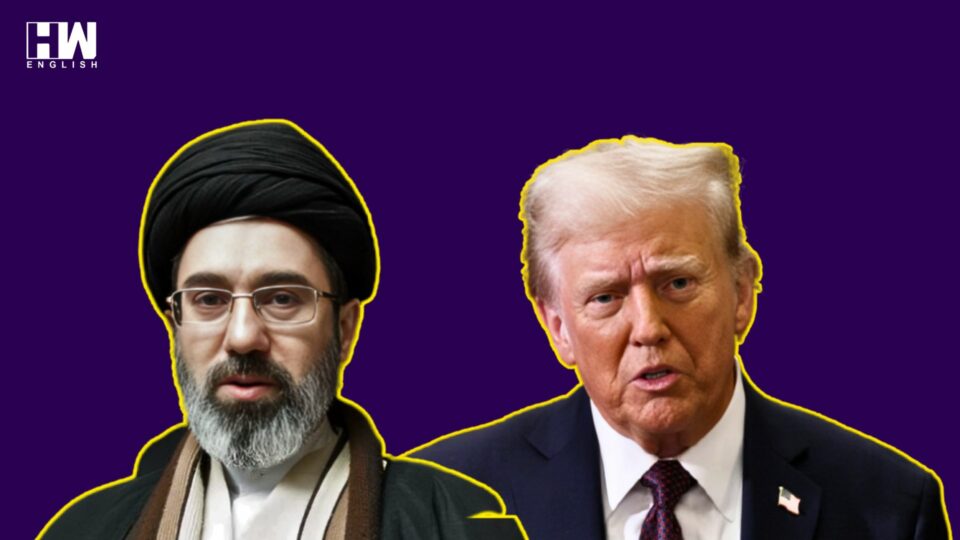
There is also the question of what Washington’s real objective is. The current administration under Donald Trump does not appear to be betting on moderation. Trump has publicly dismissed Mojtaba as a “lightweight,” suggesting the strategy may not be a smoother transition at all, but the eventual collapse of the current system.
Meanwhile, the immediate geopolitical consequences are already visible. Oil prices have crossed the $100 mark and tensions around the Strait of Hormuz are rising again, threatening global energy supply lines.
History repeatedly shows something uncomfortable about regime change efforts. Removing a system rarely guarantees that what replaces it will be softer, calmer, or easier to deal with.
Sometimes the vacuum produces exactly the opposite.
As an independent media platform, we do not take advertisements from governments and corporate houses. It is you, our readers, who have supported us on our journey to do honest and unbiased journalism. Please contribute, so that we can continue to do the same in future.
